









Why your boiler makes a banging noise in Arizona

Step 1 of 3: Equipment

Why does my boiler make a banging noise?

A boiler that bangs or knocks when it fires up usually points to something going on inside the heat exchanger, and it's not a noise to ignore even though your home doesn't lean on the boiler much once Arizona's heat sets in. You want to know if this is routine or a sign of real trouble, and what it means for keeping the house comfortable when you do need the heat.

It's almost always mineral scale or trapped water hitting a hot surface

The banging comes from water turning to steam pockets inside a heat exchanger coated with scale, or from water hammer in the pipes when a valve closes fast. Scale builds up over years as minerals in the water settle on the hottest surfaces, and once it's there, water underneath it boils and collapses with a knock you can hear through the house. Arizona's water tends to run hard, which feeds that buildup faster than it would somewhere with softer water. The sound doesn't mean the boiler is about to fail, but it does mean something inside needs attention before you're relying on it through the winter months.

A woman with dark hair in a bun wearing a cream knit sweater sits on a gray sofa in a bright living room, looking off to the side.
A woman wrapped in a knit blanket sits on a gray sofa in a living room, looking toward a bright window with houseplants and an armchair in the background.
A woman in a gray cowl-neck sweater sits on a light sofa with cushions, smiling and looking to the side, with a kitchen and window visible behind her.
A woman with dark hair in a bun, wearing a light linen shirt, sits on a sofa and looks to the side, with a window, houseplants and a kitchen with pendant lights blurred behind her.

Is this banging something to worry about right now

You probably hear it most when the boiler first kicks on, a hard knock or a series of bangs from inside the unit, sometimes loud enough to notice from another room. It may ease off once the water heats through, or it may keep up the whole cycle. Either way, it means something inside is working against itself every time it fires. Left alone, that stress on the heat exchanger can wear it out well before it should fail, and that's the part that heats your water safely. For a household counting on hot water and steady heat on the cold mornings here, a cracked or failing exchanger is the outcome worth catching this early.

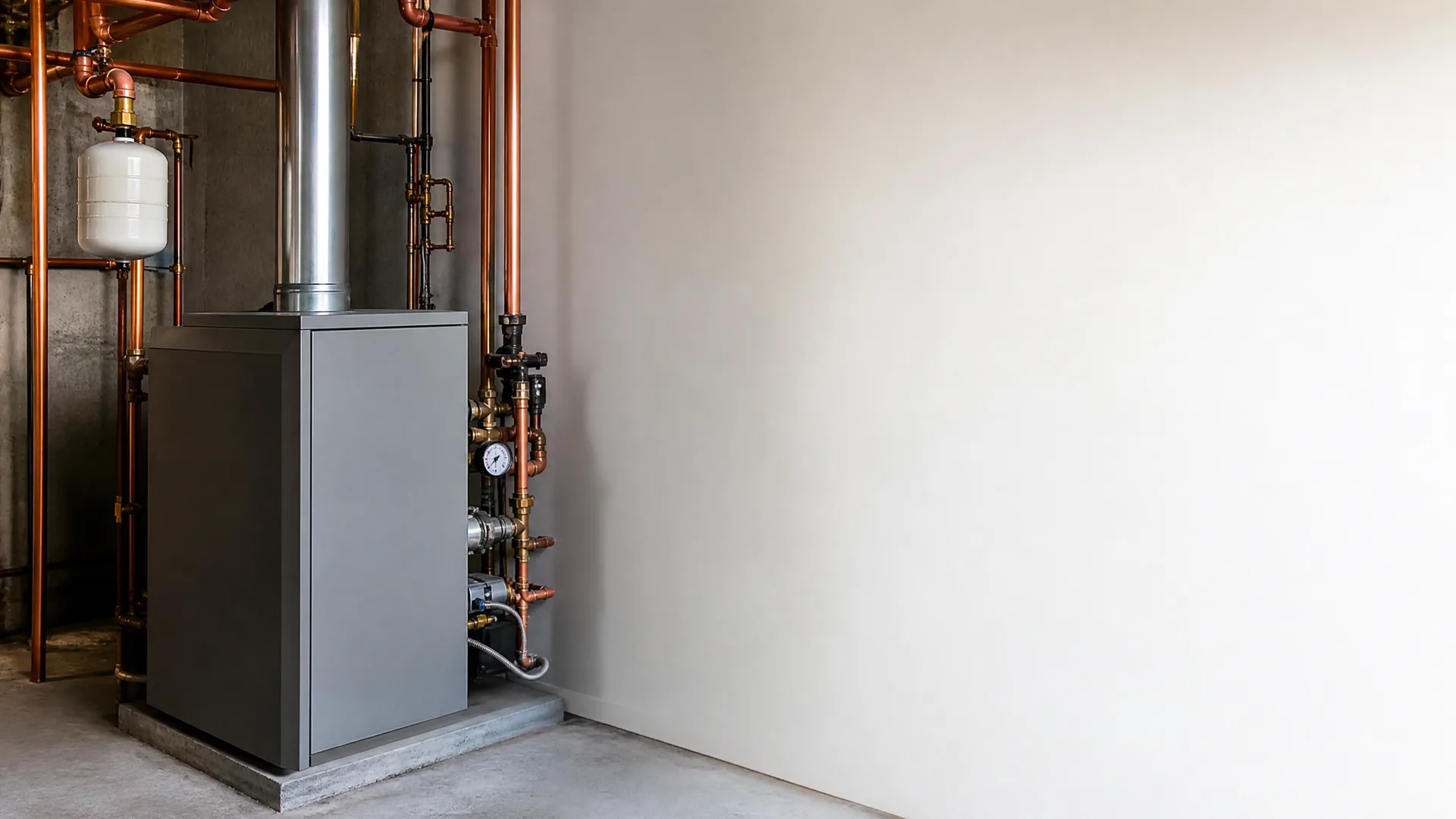
A grey floor-standing boiler with a metal flue and copper pipework, valves and a pressure gauge stands in the corner of a room with plain light walls and a concrete floor.

What's actually banging inside

The noise usually comes from kettling. Scale or sediment builds up on the heat exchanger and traps a layer of water against the metal. That trapped water boils faster than the water around it, and the steam pockets collapse with a bang as cooler water rushes in to fill the space. The more buildup there is, the harder the knocking gets, and it tends to get worse over time rather than better on its own.

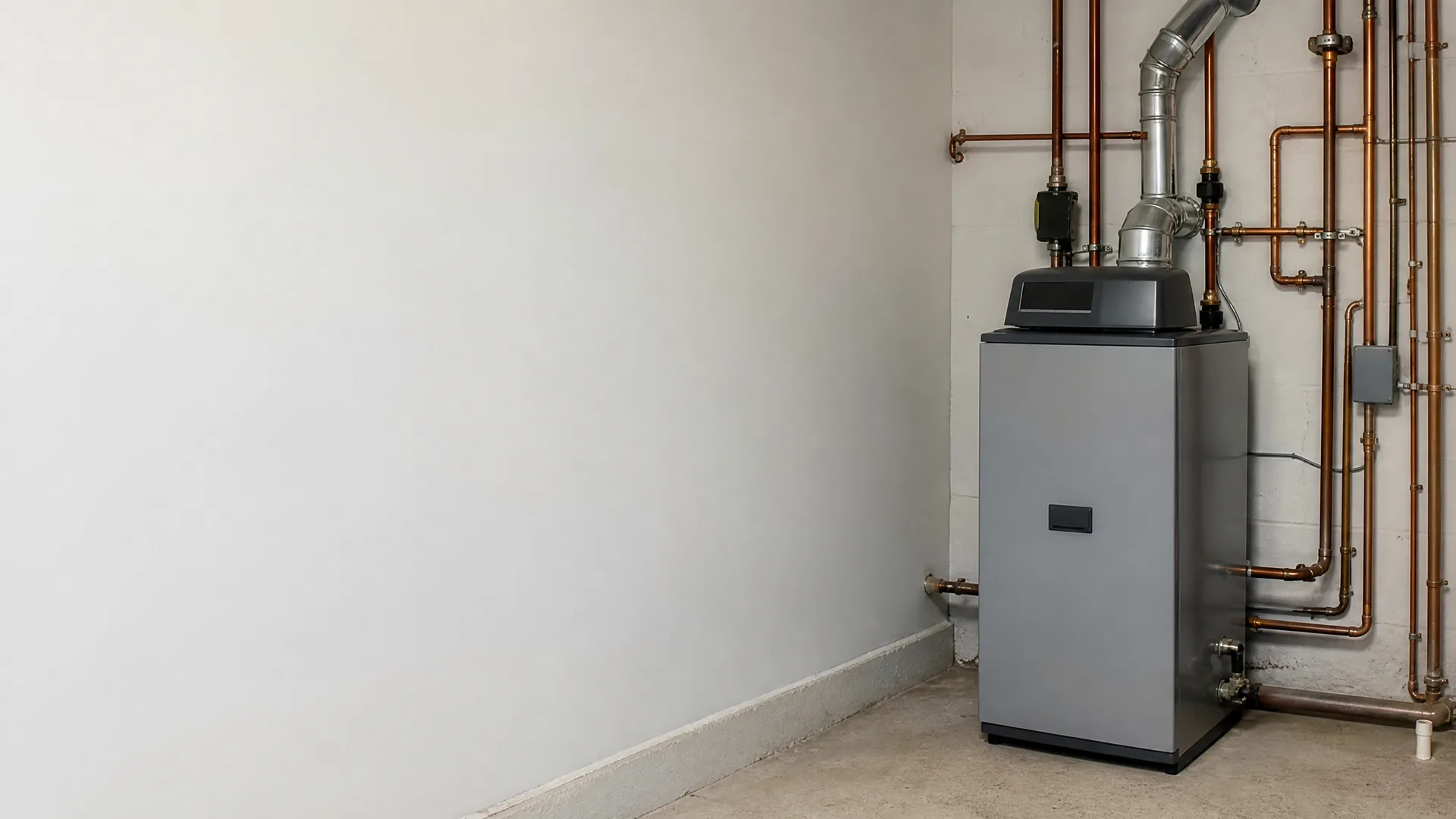
A gray floor-standing boiler with a metal flue pipe stands in the corner of a plain painted basement room, connected to copper pipes running along the wall.

Why it runs less here

Most homes in Arizona heat with electricity, and a boiler here only has to work the months when it's actually cold. That lighter schedule doesn't stop scale from forming. Arizona water tends to leave mineral deposits behind, and those deposits settle inside the heat exchanger whether the boiler fires every day or just a handful of mornings each winter. Fewer hours running just means more time for sediment to sit undisturbed between cycles.

A smiling man in a denim shirt and white t-shirt stands in an open dark doorway of a stucco house, facing a woman with long brown hair and a green jacket seen from behind in the foreground.

Why it gets worse the less the boiler runs

Scale doesn't wash away between cycles. Once it's on the heat exchanger, it sits there, and every time the boiler fires, the same trapped water boils and collapses again. In most of the country that happens most days for months at a stretch. In Arizona, where electric heat covers most homes and a boiler might only kick on for a handful of mornings a year, the gaps between cycles are longer. That doesn't slow the buildup. It just means you hear the banging less often, which makes it easy to let a January noise go unmentioned until it shows up again in December.

A plumber who works on boilers can tell from the sound and the timing roughly how bad the scale is and whether the heat exchanger still has life in it. That's not a guess you can make from another room. If you'd rather not spend a weekend calling around for someone who still works on boilers in a state where most people don't have one, this page can put you in touch with a contractor who takes boiler calls and knows the equipment, and they'll reach out to you directly.

A gray upholstered sofa with a matching cushion sits beside a potted plant and a wooden table holding a small green plant in a stone pot, near a curtained window.
A smiling older woman with gray hair in a cream knit sweater stands in a dimly lit kitchen beside a window showing snow outside, with a round loaf of bread on the counter in the foreground.
A woman and a child wrapped together in a knitted gray blanket on a couch, with the child's head resting on her shoulder and a lit table lamp and houseplant in the background.

Matched to your boiler job

Describe your boiler job once, to one pro.

There's no charge for the request.

Running it anyway versus calling someone

You can keep firing the boiler through the bang and hope it quiets down. Some do, for a while, especially once the water heats through and the knocking eases off. But the scale causing it doesn't go away on its own, and each cycle adds a little more buildup on the heat exchanger. If your home leans on electric heat most of the winter and the boiler only runs here and there, it's easy to let the noise sit for weeks between uses without anyone deciding to deal with it.

What getting it looked at actually saves you

The alternative is finding a contractor who works on boilers, which in Arizona can mean more calling around than it would for a furnace or an AC unit, since fewer outfits here handle them regularly. That means searching, explaining the noise over the phone more than once, and sorting through whoever calls back. Getting matched with someone who already services boilers skips that part. You explain the banging once, to someone who's heard it before, and they reach out to you instead of the other way around. The boiler itself still needs the same look either way.

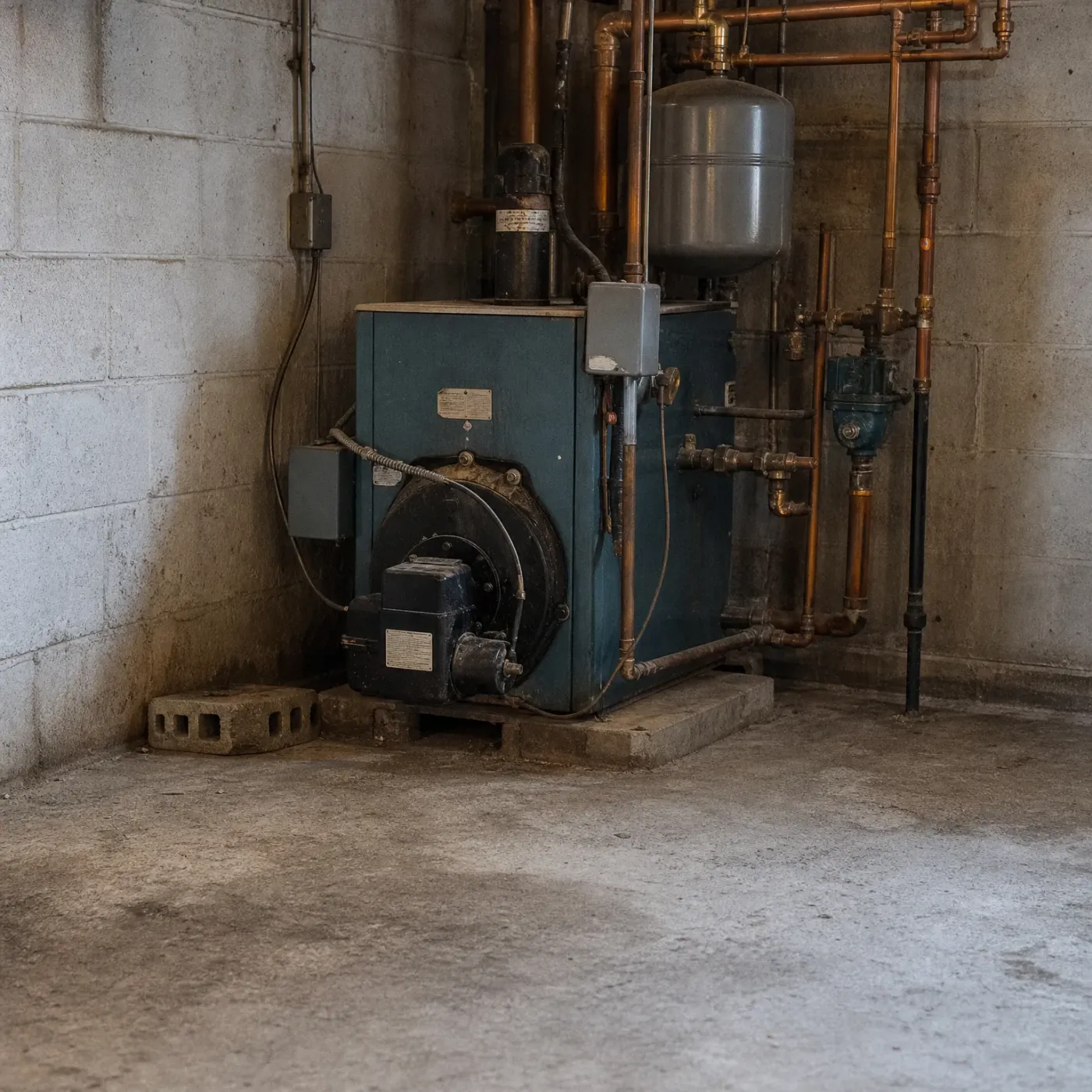
A blue oil-fired boiler with a burner unit sits on a concrete pad in a basement corner, with copper piping, valves and a gray expansion tank overhead against concrete block walls.
Before you get your boiler repair
A gray boiler unit on a concrete pad in a basement corner, connected to copper piping, valves and a metal flue against painted concrete block walls.
After you get your boiler repair
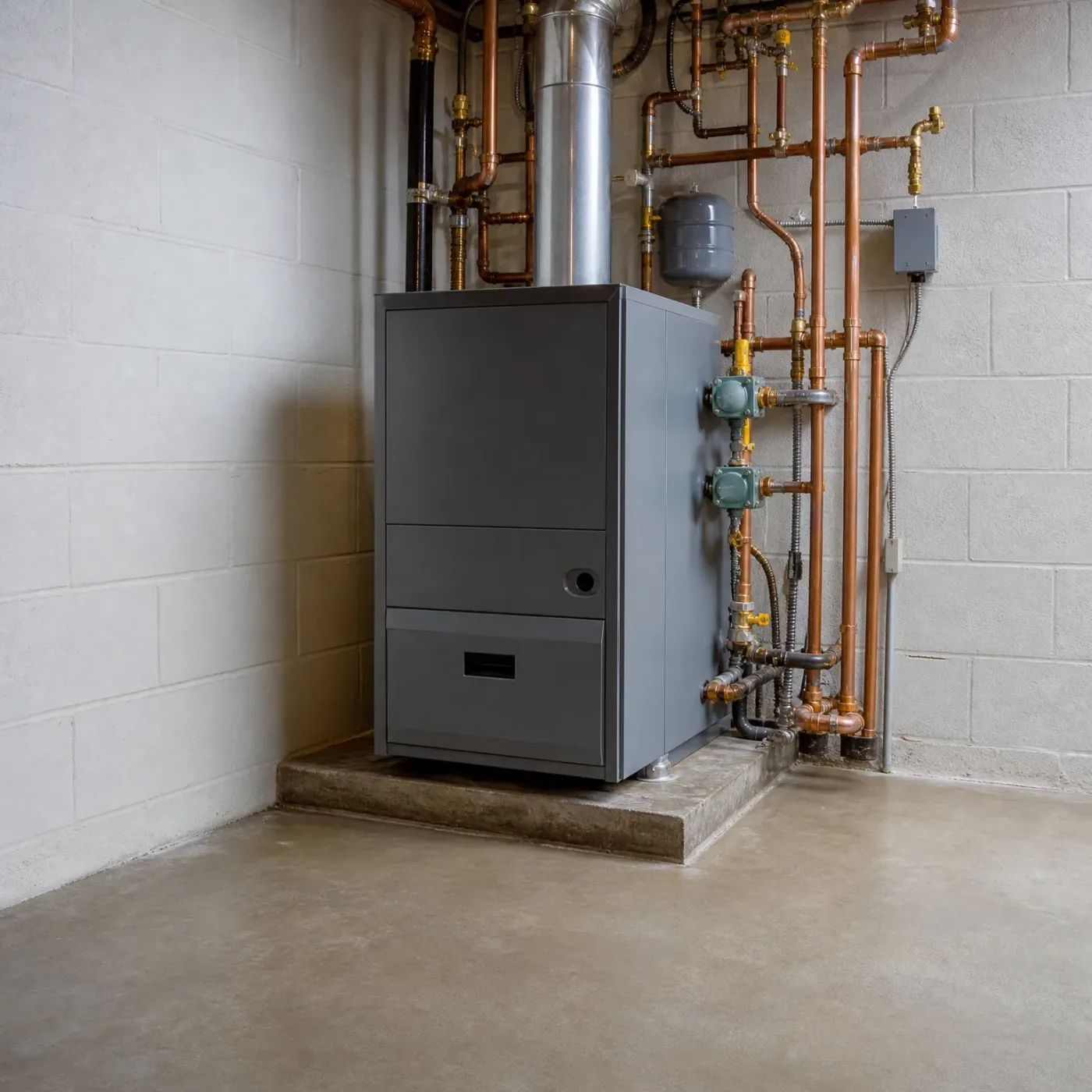
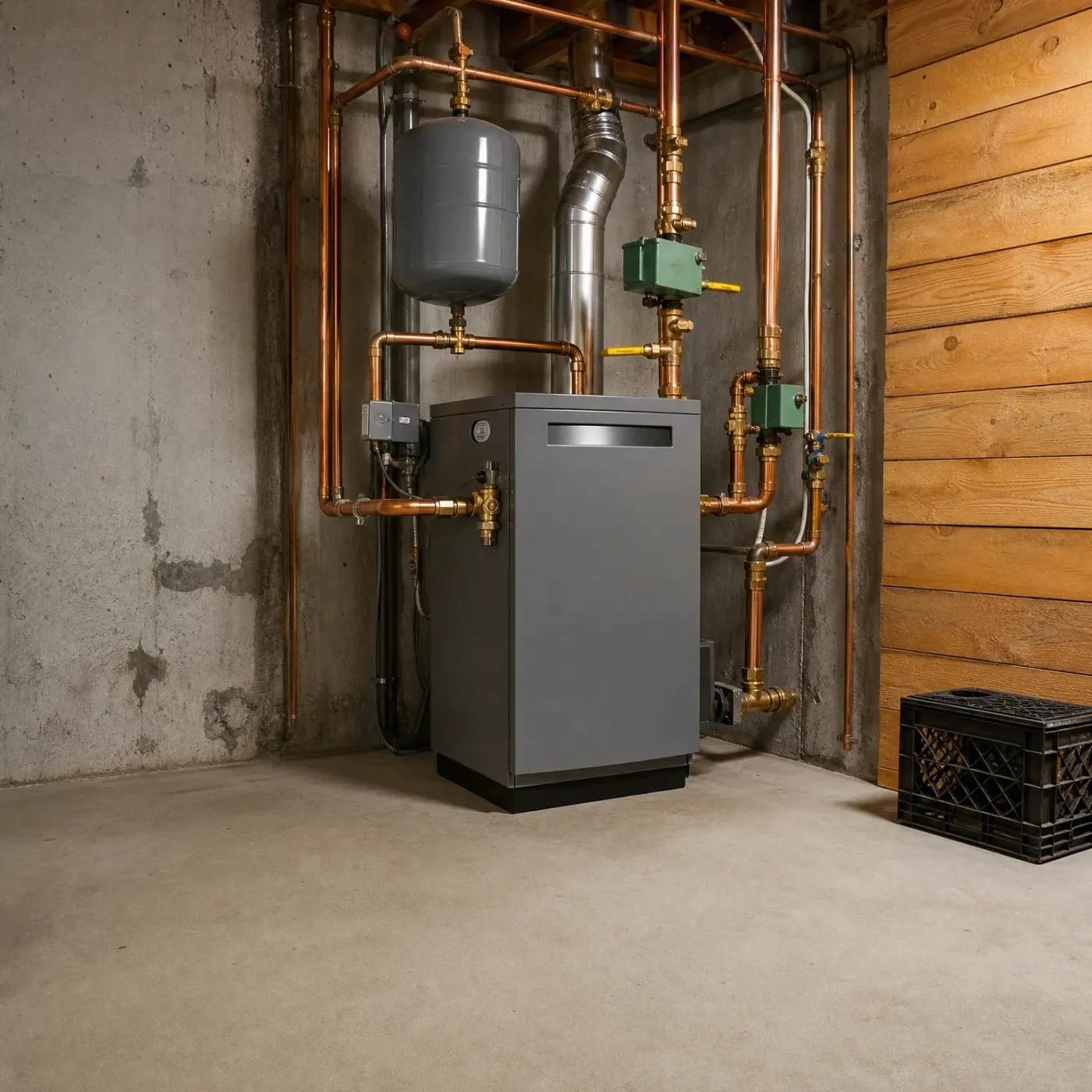
A gray boiler unit in a basement corner with copper piping, brass valves, a gray expansion tank, a metal flue duct, concrete walls and a wood-paneled wall, with a black plastic crate on the floor at right.

Boiler running clean

This is a boiler firing the way it should, water moving through the copper piping and zone valves without a sound out of place. No knocking when it starts, no banging as the water heats. The heat exchanger underneath is doing its job with nothing trapped against the metal.
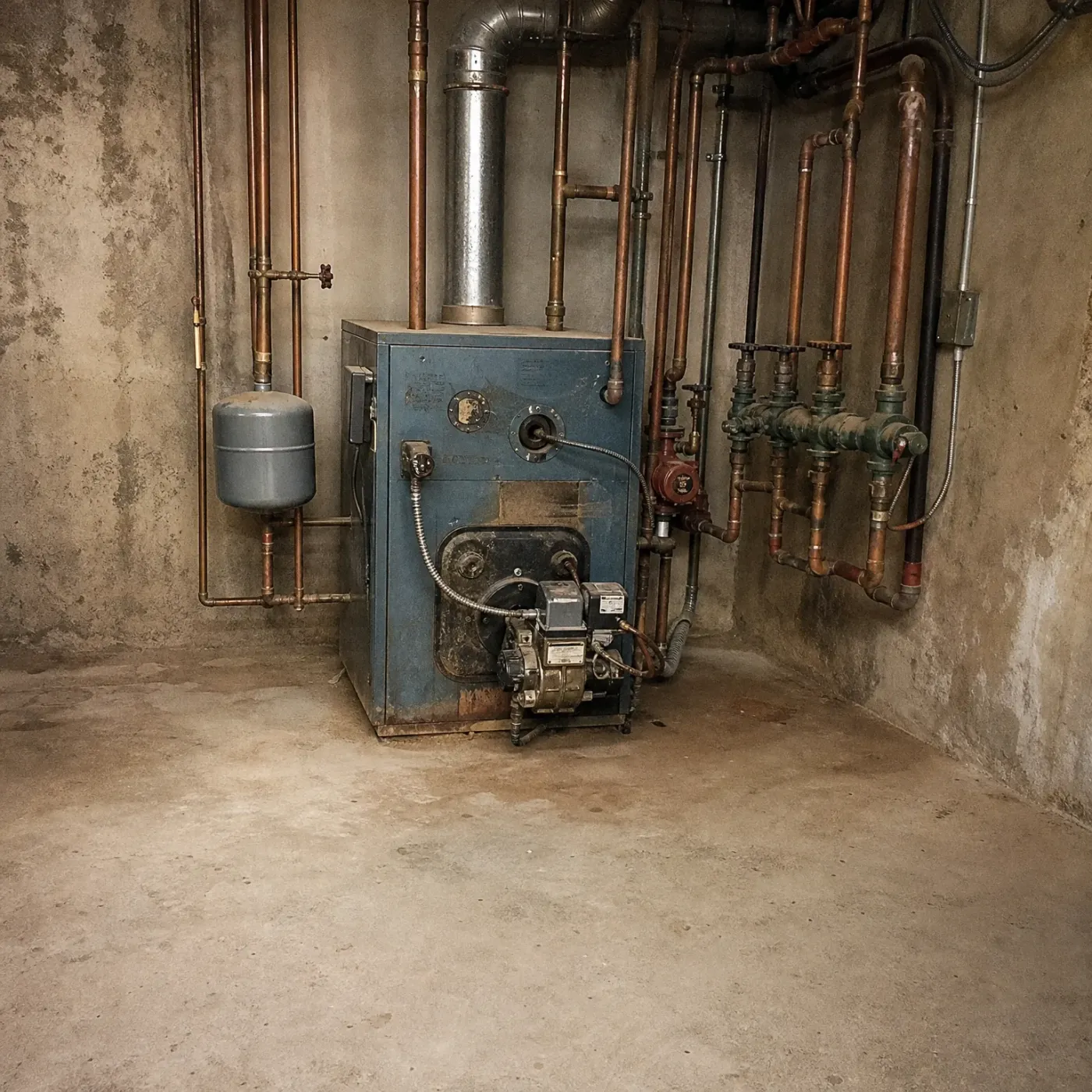

An older blue boiler with a burner unit stands in a concrete basement corner, connected to copper and steel piping, valves and a gray expansion tank on the wall.

Boiler in trouble

This is where kettling takes hold, an older unit in the corner with scale built up inside the heat exchanger where you can't see it. The banging you hear comes from right here. Left alone, the same cycle repeats every time the boiler fires, and the metal underneath keeps taking the stress.

Winter nights average 39°F statewide

39°F is a mild low, and it's why your boiler might only cycle on for a short stretch on winter nights. Fewer, shorter runs still bring the same bang each time, so the knock doesn't need a hard freeze to show up.

NOAA nClimDiv 1991-2020 county normals weighted by homes

What the banging actually tells you

  • The bang comes from scale trapping water against the heat exchanger, not from anything your Arizona heat cycle is doing differently.
  • Fewer winter cycles don't give the scale a chance to clear, so the knock can show up on the first cold night of the season.
  • Letting it run through the noise doesn't stop the buildup, and the knocking tends to come back on the next cycle.
  • A contractor who checks the heat exchanger and clears or descales it is what actually quiets the boiler down.
  • Instead of searching around for someone who works on boilers, calling several shops, and explaining the same banging noise more than once, you get matched with a contractor who reaches out to you directly.

The bang is scale, sitting on the heat exchanger and trapping water against the metal until it boils and collapses. That has nothing to do with Arizona's heat or how little the boiler runs here. It's a buildup issue, and buildup doesn't care what the thermostat outside says. Because the boiler only fires on the cooler nights, the scale has long stretches where nothing disturbs it. So the first cold snap can bring the same knock back, sometimes louder than you remember it. Running the boiler through the noise doesn't wear the scale down. It just means another cycle, another bang, and a heat exchanger working harder than it should to move heat into the water around it. None of that clears on its own.

What changes it is someone opening the unit up, checking the heat exchanger, and clearing or descaling it so the water moves the way it's supposed to. That's a job for a contractor who knows boilers, not a guess you can fix by letting it run longer.

Finding that person is usually the slow part. You'd be looking up who in your area even services boilers, since they're not common here, calling a few, and describing the same banging noise each time until someone can get you on the schedule. Getting matched with a contractor skips that. You explain it once, and they reach out to you.

Sunlight falls across a beige upholstered sofa with a textured woven cushion and a chunky knit throw, beside a dark wood cabinet holding a ceramic vase with green leafy branches, near a white-framed window.
A sunlit corner of a room with a wooden side table holding a ceramic vase of green foliage and a wooden bowl, beside a light upholstered sofa with a knit throw and rust-colored pillow, with window shadows cast on a beige wall.
A sunlit room corner with beige walls, a white-framed window with sheer cream curtain, wood floor with a light rug, and a woven basket holding a knit blanket.
A beige ceramic vase holding a leafy green branch sits on a wooden cabinet in a corner, with sunlight through a sheer curtain casting leaf shadows on the wall.
A grey upholstered sofa with a rust-orange velvet cushion and a textured throw sits beside a window with linen curtains, next to a wooden side table holding a pale ceramic vase of olive branches.

A boiler pro near you

Fill out one short form instead of calling around.

Connect with a pro

You only hire the pro if you want to.