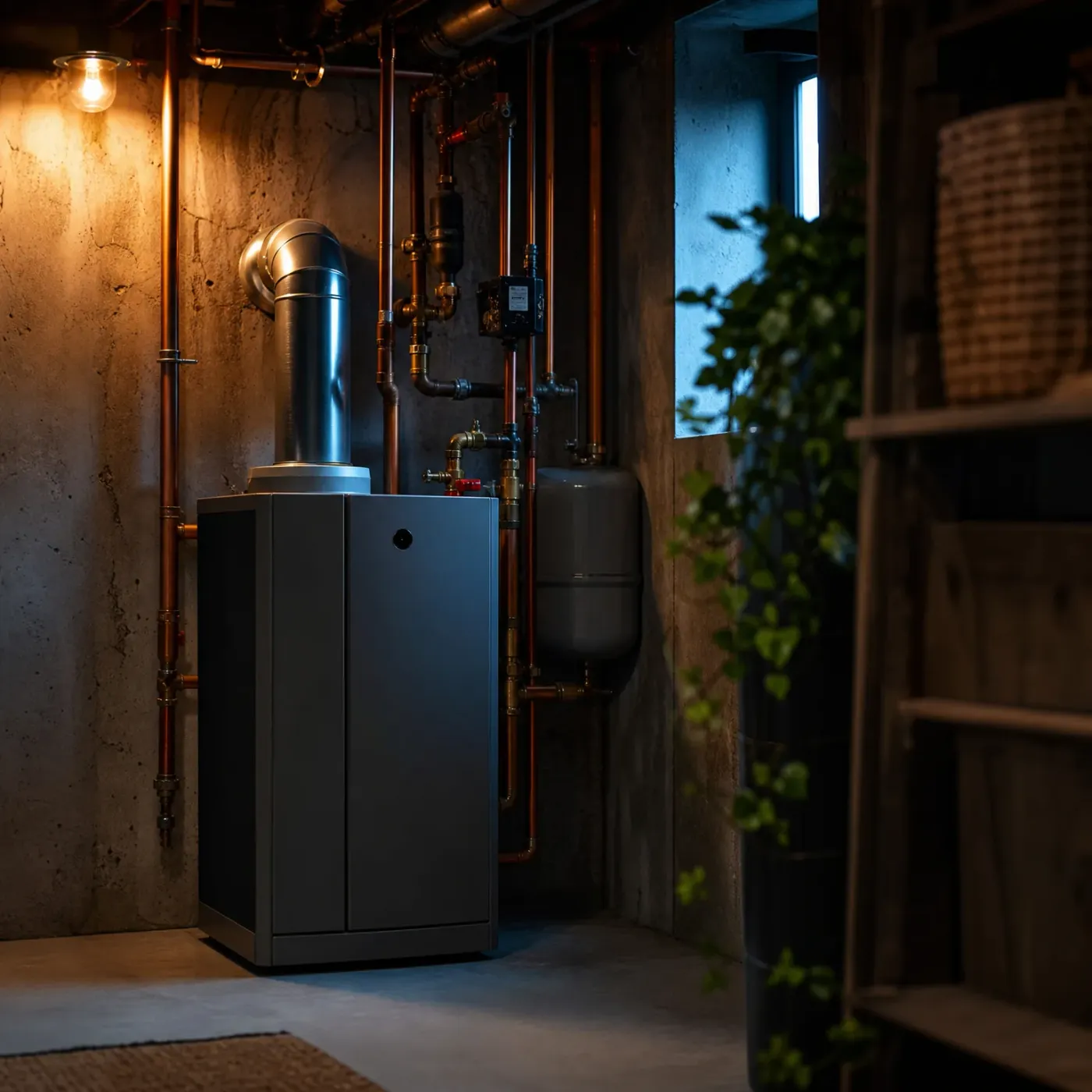
A dark grey floor-standing boiler with a metal flue stands against a concrete basement wall, surrounded by copper pipework, valves and a wall-mounted expansion tank, with ivy and a shelving unit at right.

A local pro for your boiler repair

Why your boiler is losing pressure in Arizona

A boiler that keeps losing pressure usually points to a leak somewhere in the system, or a fault in the expansion tank or valve. It's not something to keep topping off and ignoring. Answer that below, then get matched with a contractor who can track down where yours is losing ground.

Get matched

A boiler loses pressure when water is escaping the sealed system faster than it should, and in most homes that means a leak at a pipe joint, a valve, or the pressure relief valve itself letting out small amounts over time. The expansion tank can also be at fault if its internal bladder has failed, since it can no longer absorb the system's pressure changes the way it's supposed to. Arizona's electric-heat homes that still run a boiler usually use it for radiant heat rather than a furnace, so the system holds water and pressure year round, not just in winter, and a slow leak can go unnoticed for months in the dry months when the heat barely runs. Topping off the pressure gets you through the day, but it doesn't fix what's letting water out, and that water has to be going somewhere even if you can't see it.

A woman with long wavy brown hair in a grey ribbed sweater sits on a couch indoors, looking toward a window, with a potted palm-like plant and fireplace behind her.
A woman with long brown hair wearing a green V-neck top and beige cardigan sits on a light sofa, looking off to the side, with a dining table, lamp and framed picture in the background.
A woman with long dark hair in a cream knit sweater sits on a beige sofa indoors, looking toward a bright window with a houseplant and framed picture in the background.
A woman with long dark hair in a green knit sweater sits on a couch indoors, smiling and looking toward a window with a blurred room behind her.

What are you noticing with your boiler right now

You check the gauge and it's sitting below where it should be, again, even though you topped it off not long ago. Maybe there's a damp patch near a pipe joint or under the valve, or a faint mineral smell where water's been drying on metal. The pressure relief valve might be dripping, slow enough that you only notice the small puddle later. If this keeps happening, the boiler can start shutting itself down or struggling to hold heat, which matters most on the days it's actually running. Left alone, a steady leak can also mean water finding its way into places it shouldn't, around the unit or the floor beneath it.

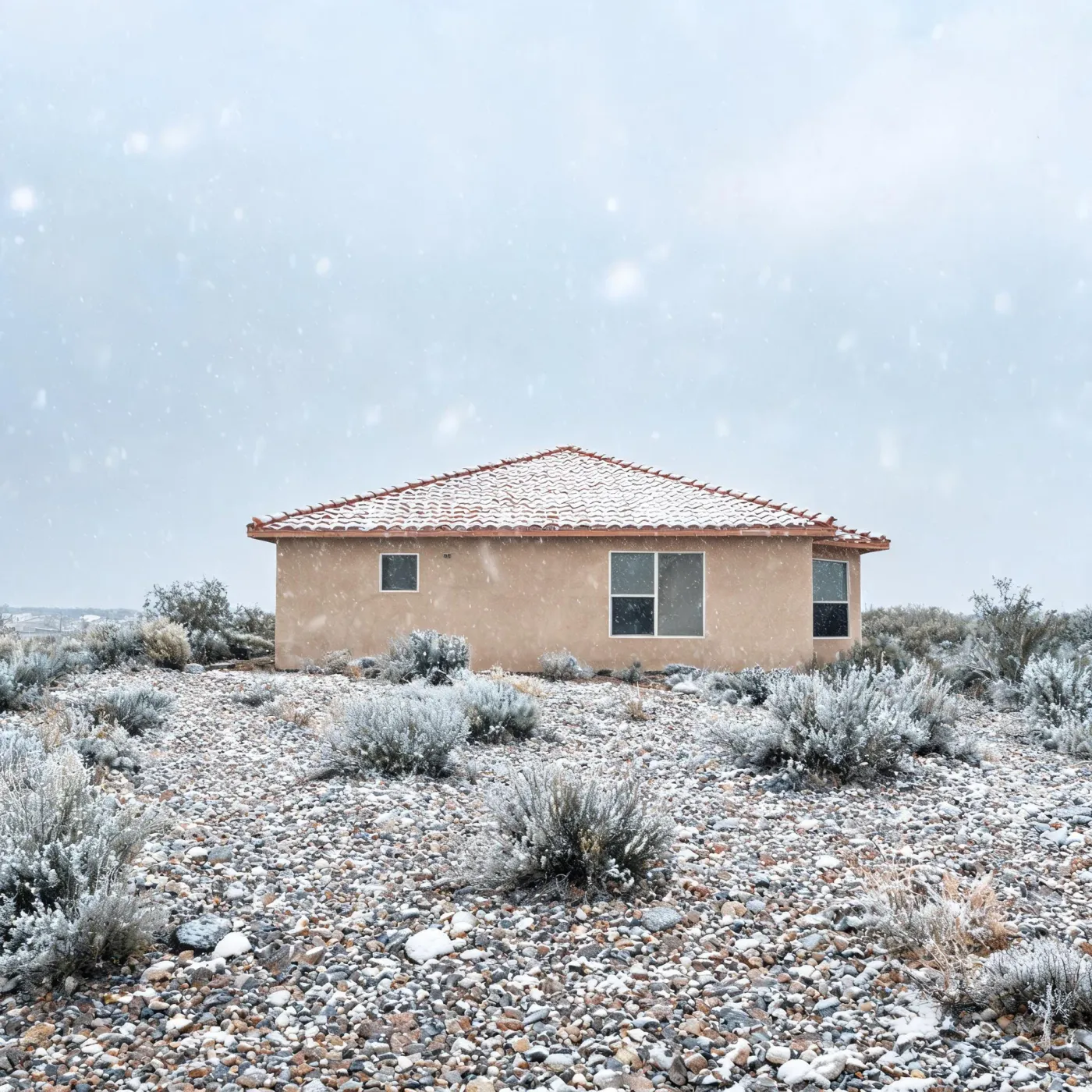
A single-story tan stucco house with a red tile roof stands amid snow-dusted desert scrub and a rocky gravel foreground during falling snow.

Arizona winter nights average 39°F statewide, according to the National Weather Service. That's cold enough for most boilers here to run for stretches most nights, December through February. Every time the system fires up, the water inside heats and expands, and the pressure relief valve lets a little out if it climbs too high. A boiler that loses a few psi during a mild stretch can lose it faster once nights start dropping into the 30s, because the valve is cycling more often. If your gauge keeps dropping through those months, that's more wear on a leak or a valve that was already letting water go slowly.

NOAA nClimDiv 1991-2020 county normals weighted by homes

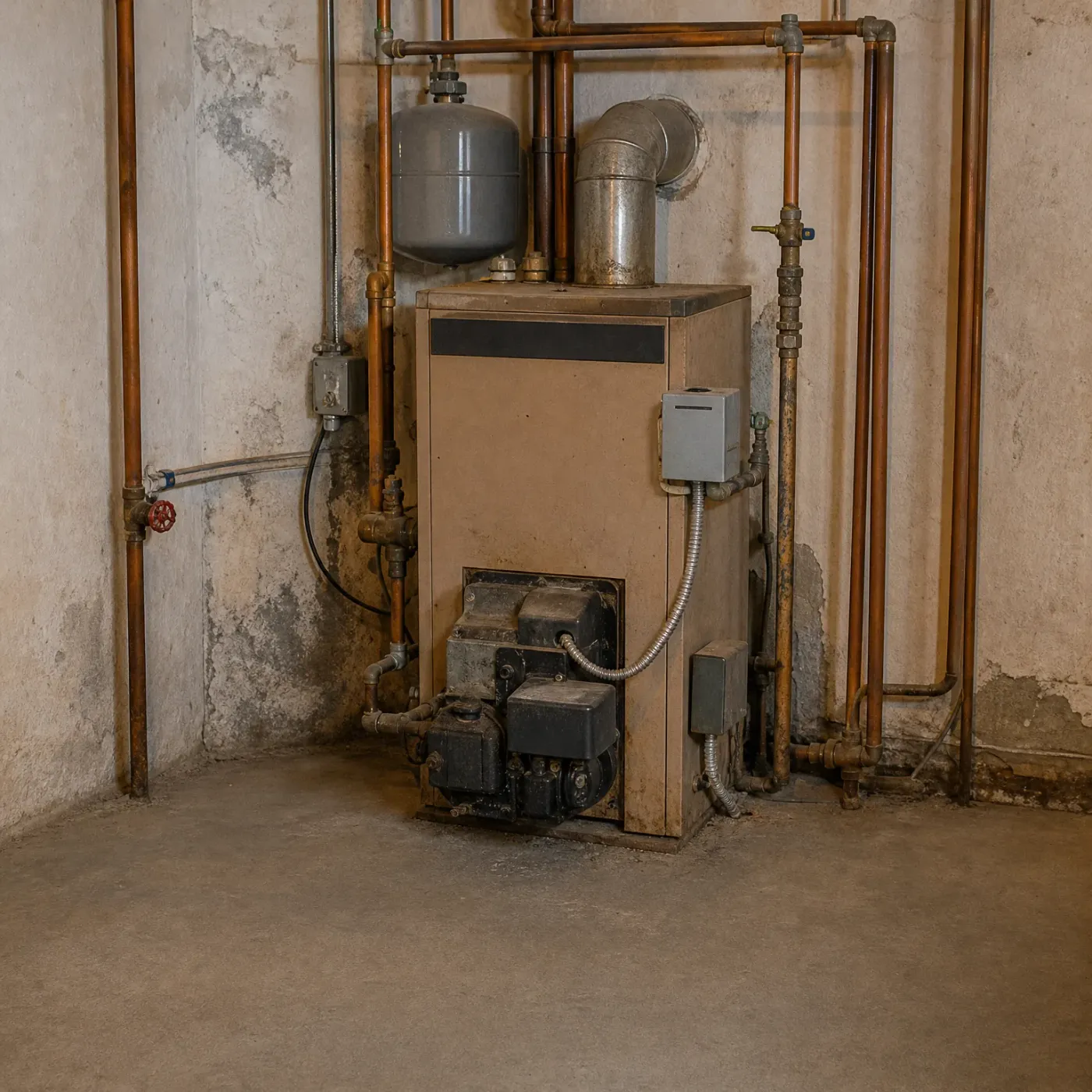
An older oil-fired boiler with a burner unit, flue pipe, expansion tank and copper piping stands in the corner of a concrete-floored basement with weathered plaster walls.
Before you get your boiler repair
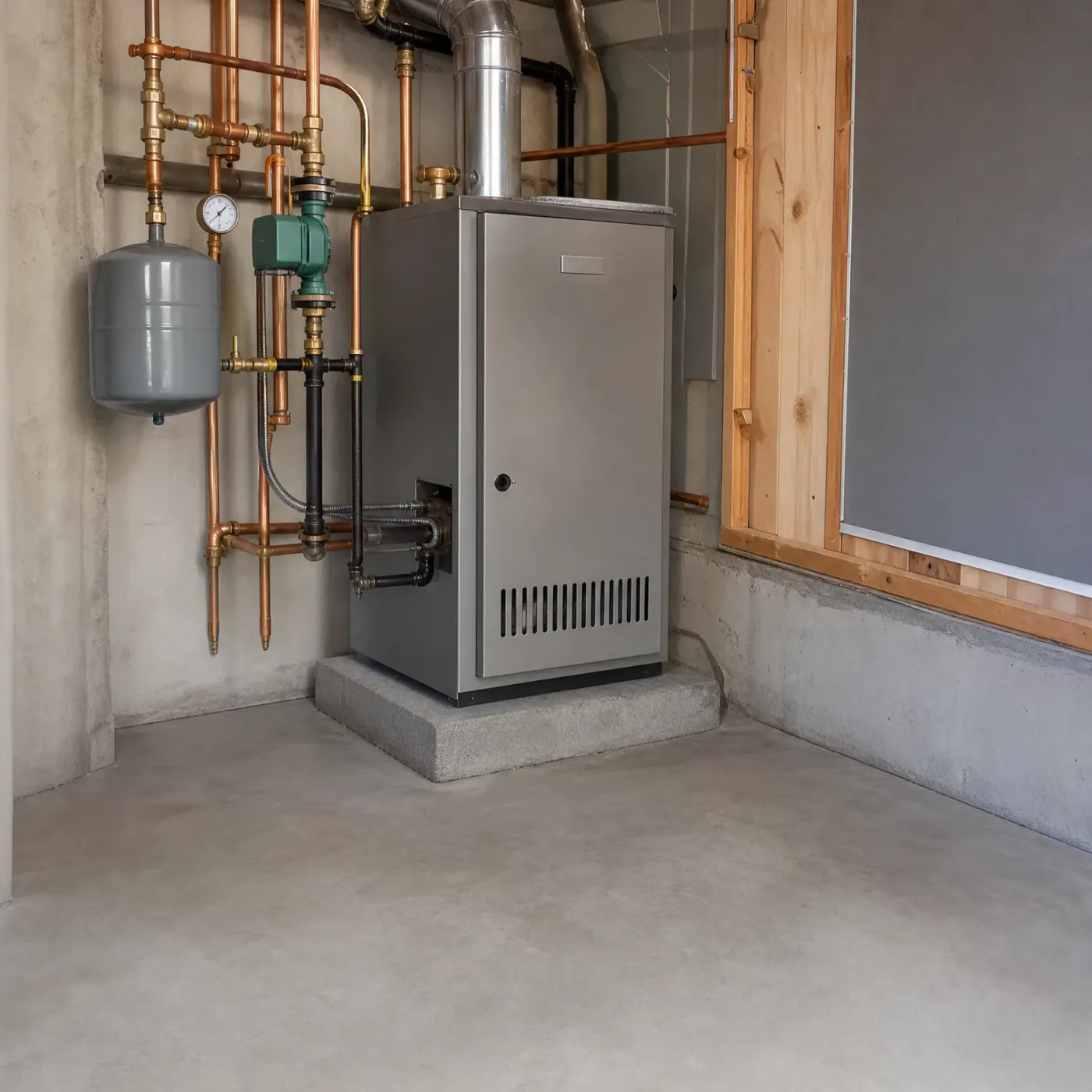
A gray boiler on a concrete pad in a basement corner, connected to copper and black pipes with a gauge, circulator pump, and gray expansion tank, beside a wood-framed wall.
After you get your boiler repair

Winter nights average 39°F statewide

At 39°F, your boiler is cycling on and off most nights from December through February, not running once and holding steady. Each restart stresses a weak seam or fitting a little more, so a slow leak shows up as pressure loss again and again instead of settling down on its own.

NOAA nClimDiv 1991-2020 county normals weighted by homes

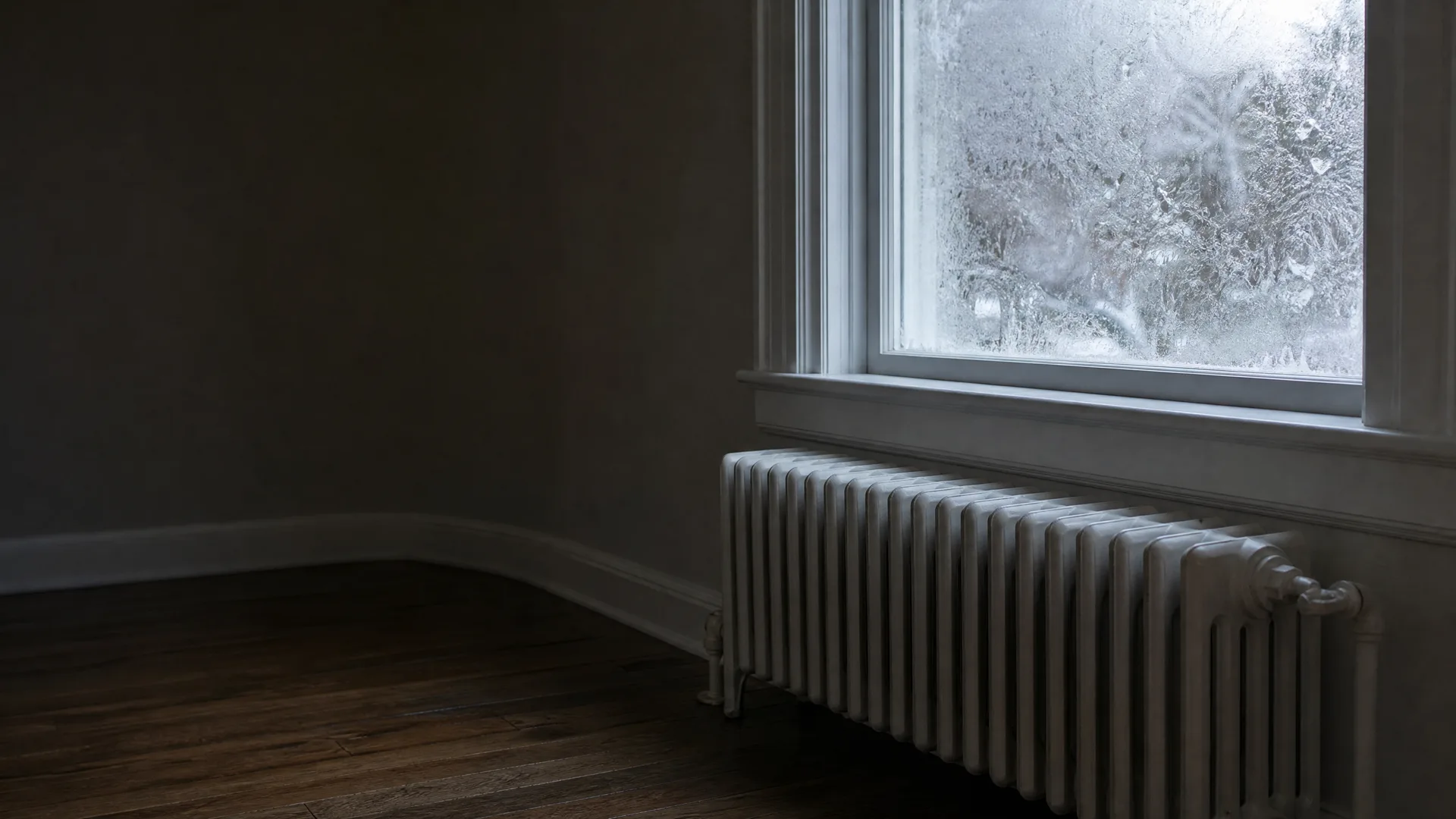
A white cast-iron column radiator under a frosted window in a dim empty room with dark walls and a wood floor, with snowy trees visible outside.

It's a January morning, early, the house still quiet. You're in the living room with your coffee, and the radiator under the window has frost creeping up the inside of the glass. The cast iron ticks as it heats. You crouch down and check the valve at its base, the way you've started doing most mornings now, and there's a thin ring of water on the floor beneath it. Not a puddle. Just enough to tell you it's happened again overnight. Outside, the desert sky is going pale and the air is dry and still. Inside, that one valve keeps weeping, and the gauge on the boiler downstairs will read low again by the time you get to it.

Get the right pro for your boiler

Once you send the form, finding a pro is off your list.

Sending the form costs nothing.

A man seen from behind raises his hand to wave at a woman standing in the open front doorway of a single-story house with gray shingle siding, white columns and a gabled porch entry.

What's actually losing the water

A boiler is a sealed loop. The water inside stays put, heats, cools, and circulates again, topped off only by the automatic feed valve when pressure drops. That valve is doing its job if it fires once in a while. It's a problem if it's refilling the system every few days, because that water has to be going somewhere, and it isn't turning to steam in a sealed loop. It's finding a way out through a joint, a valve seat, or the seal on a circulator pump.

The pressure relief valve is built to open at a set point and dump a small amount of water if pressure gets too high, then reseat itself. Sometimes that seat gets a bit of mineral grit on it and it never fully closes again, so it weeps slowly instead of holding. From the gauge, that looks identical to a leak somewhere else in the system. Finding which one it is means someone tracing the loop with the right pressure gauges and a flashlight, and once you're matched with a contractor, that part of it is off your plate.

A gray upholstered sofa with a textured cushion sits beside a dark round side table holding a vase of green foliage, with a table lamp and sheer-curtained window behind.
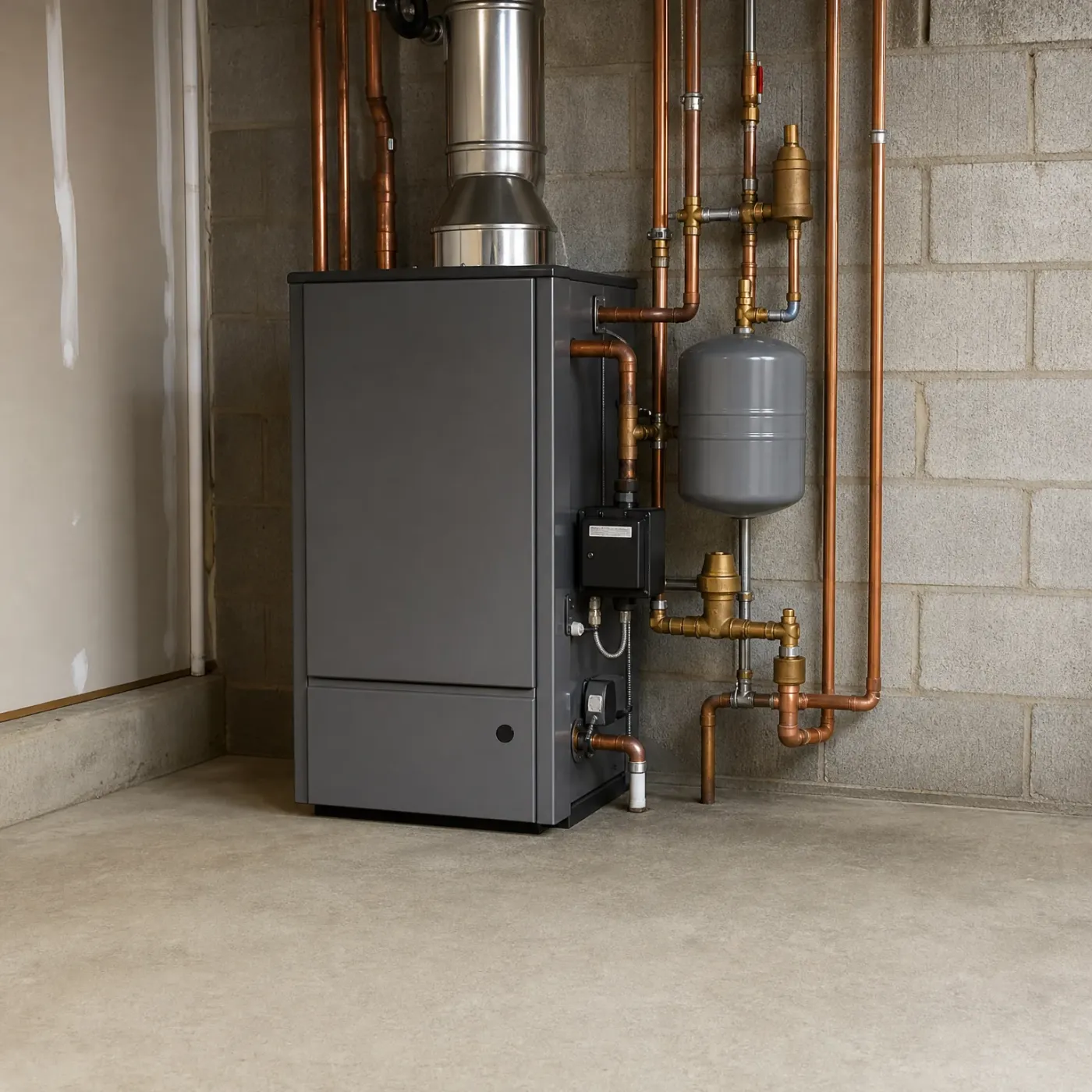
A gray floor-standing boiler with a metal flue stands against a concrete block wall, connected to copper pipes, brass valves and a gray expansion tank, on a bare concrete floor.

Holding pressure the way it should

This is a sealed system doing its job. The copper runs from the boiler stay tight at every joint and fitting, the expansion tank on the wall takes up the water as it heats, and the gauge holds steady instead of creeping down.

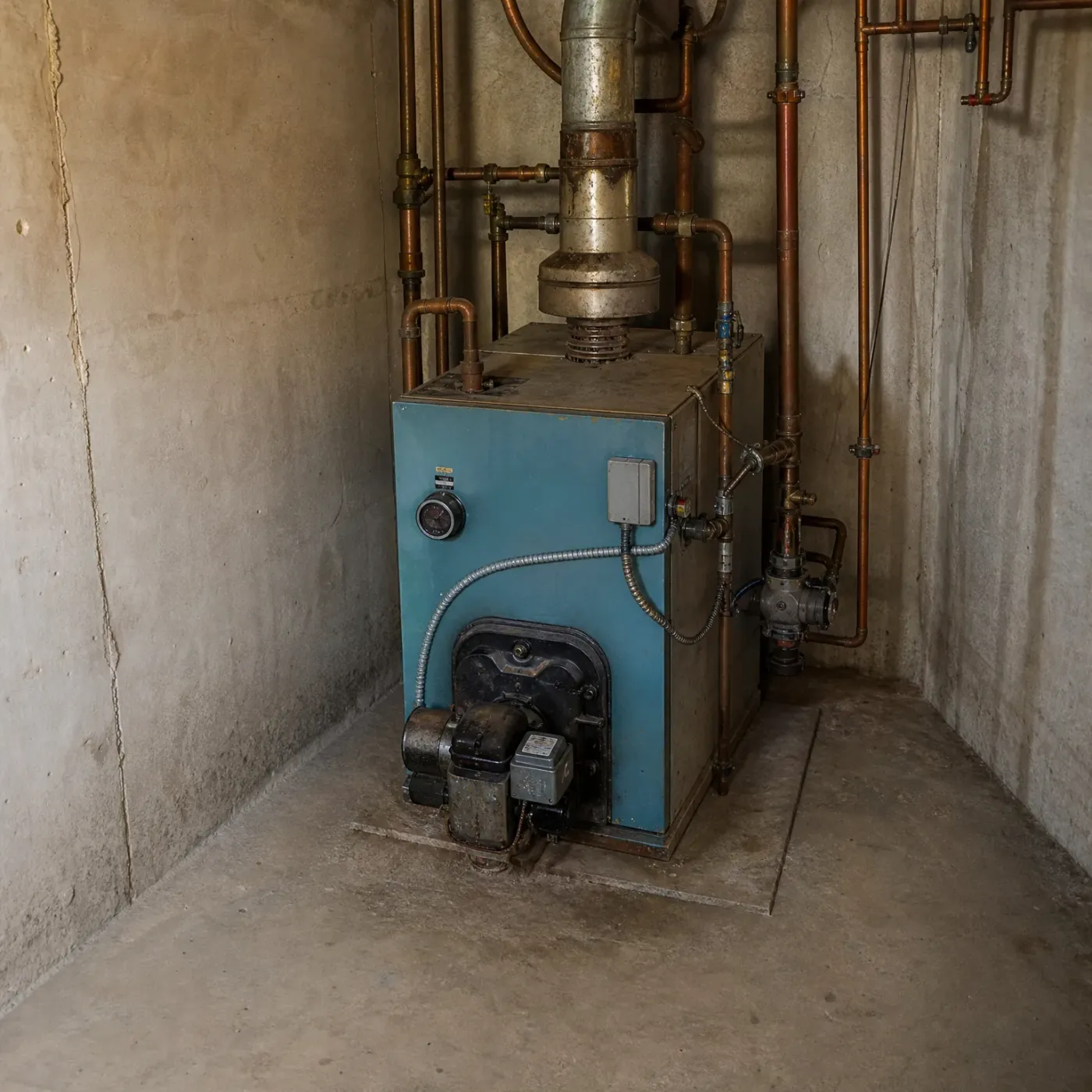
A blue oil-fired boiler with a burner unit and pressure gauge stands in a concrete basement corner, connected to copper pipes and a metal flue.

Pressure that keeps dropping

An older unit like this one has had more years for a joint to weep or a valve to wear. Check where the copper lines meet the burner assembly and around the fuel pump. A damp spot in any of those corners is where your water is going.

Why does my boiler lose pressure faster in the morning?

You top off the gauge before bed and by the time you're up making coffee it's already dropped again, faster than it seemed to fall the rest of the day. It makes you wonder if something changes overnight, or if you're just noticing it more because you're standing right there looking at it before the house warms up.

Morning is when the system is coldest, so a small leak shows up most

Overnight the water in the loop cools all the way down and contracts, so the gauge naturally reads lower first thing than it did when the boiler was running the evening before. If there's a slow leak at a joint or valve, that's also when the system has gone longest without a restart to push fresh water through, so the loss looks bigger in one block of time. With Arizona lows near 39°F December through February, the boiler is cycling through the night to keep up, and each cool-down and restart gives a weak fitting another chance to weep a little water out. By morning that adds up to a drop you can actually see on the gauge.

  1. Water leaks out at a joint, valve, or seam under pressure

  2. Pressure in the sealed loop drops below the fill line

  3. The automatic feed valve opens to add makeup water

  4. The gauge reads normal again until the leak repeats

A gray-haired woman in a cream knit sweater stands in a dimly lit kitchen at night, looking to her right, with a round loaf of bread in the foreground and a dark window and potted plant behind her.
A woman and a sleeping child wrapped together in a cream knitted blanket on a couch, with a potted plant, framed photo and lit lamp in the background.

Where the pressure is going

  • A boiler that keeps needing water almost always has a leak at a joint, a valve, or the expansion tank, not a mystery.
  • Topping off the gauge again and again just covers the drop instead of finding where the water is actually going.
  • The feed valve opening on its own, more than once in a while, means it is compensating for water that is leaving somewhere.
  • Arizona's cold winter nights put the system through repeated heating and cooling cycles, and each restart puts a little more strain on a weak fitting.
  • A licensed contractor can pressure test the system and find the exact point where it is losing water.
  • Once you send the request, finding that contractor is off your plate, and the boiler gets looked at by someone who knows what to check.

A boiler that keeps asking for water is telling you something specific. The water has to be going somewhere, out at a joint, a valve, or the expansion tank, and that place doesn't change on its own. Topping off the gauge when it drops low feels like fixing it, but it only resets the number. The leak is still there, and it will pull the gauge down again. The feed valve works the same way. It's built to add a little water now and then, but if it's opening often, it's making up for a loss that isn't stopping. Arizona's winter nights push the system through this cycle over and over, firing up and cooling down most nights from December through February, and each restart puts a little more strain on whatever fitting is already weak. That's why the drop can show up faster some mornings than others. None of this points to one obvious spot without someone actually checking. A licensed contractor can pressure test the sealed loop and find the exact joint, valve, or tank that's letting water out, instead of you guessing from a damp patch or a mineral smell. Once you send the request, that search is no longer something you have to carry. You're not left checking the gauge every few hours wondering if it's worse than yesterday. Someone who knows what to look for takes it from here.

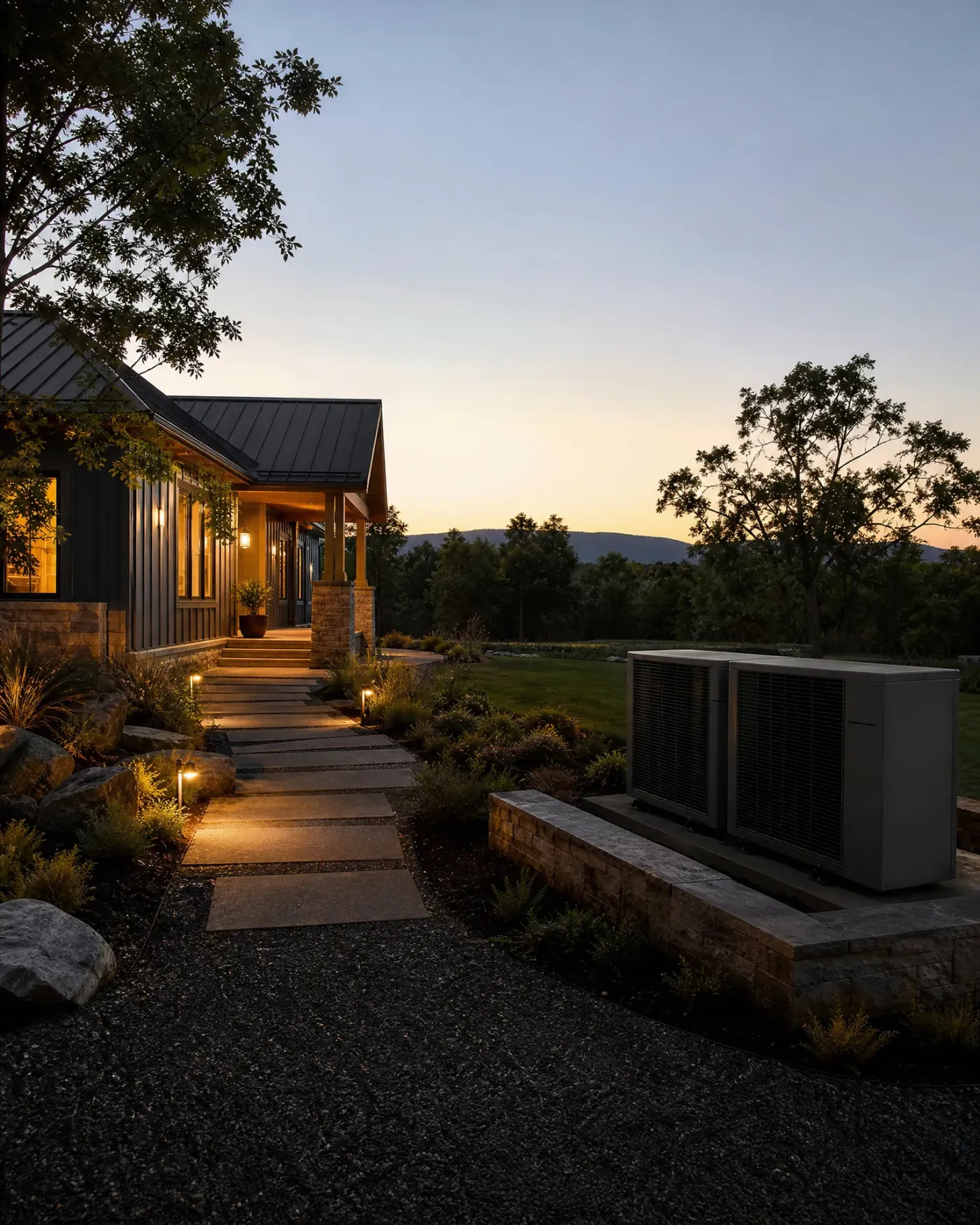
At dusk, a dark board-and-batten house with a standing-seam metal roof and lit entry walkway of stone pavers, with two large outdoor heat pump units on a stone-walled pad at right and trees and hills in the background.

Boiler Repair

A pro who works on boilers

Step 1 of 3: Equipment
  • A cream chunky cable-knit throw draped over a beige upholstered armchair beside a bright window, with a wooden side table holding a book and a vase of leafy branches at left.
    • A local pro who knows boilers gets your details and gets in touch.
    • Tell a local repair pro what your boiler is doing.
  • Living room corner with a gray sofa holding beige pillows and a knit throw, a round wooden coffee table with a dark planter and shallow bowl, a jute rug, a floor lamp, a framed landscape print on the wall, and a window showing trees.
    • Send the request today and stop worrying about who to call.
    • Send the request and finding a pro stops being your problem.
  • A living room corner with a cream sofa and cushion, knit throw, wooden coffee table holding a shallow bowl and dark ceramic vase with green foliage, a floor lamp, potted plant in a woven basket, and linen curtains at a window.
    • Answer a few questions instead of calling shop after shop.
    • Describe your boiler job once, to one pro.
  • A round reclaimed-wood coffee table with a black metal base sits on a woven rug in front of a cream sofa with cushions, with a lit built-in fireplace and a tall indoor tree in the background.
    • Your request goes to one pro, not a list of companies.
    • The pro who reaches out is licensed in Arizona.