Grand Canyon Boiler
Profile view of a bearded man wearing a black baseball cap and a dark gray T-shirt against a plain light background.

What your boiler pressure should be in Arizona

Step 1 of 3: Equipment

What should my boiler pressure be?

A boiler that's lost pressure won't heat properly, and one reading too high puts strain on the system. Since most Arizona homes heat with electricity, a boiler here is less common, and if yours came with the house, you may not know what the gauge is supposed to read or where to check it.

Most residential boilers should read between 12 and 15 psi when cold

That range keeps enough water in the system to circulate through the radiators or baseboards without air pockets forming, while staying low enough that the pressure relief valve doesn't open. The gauge is usually on the front of the boiler, near the temperature dial. Once the system heats up, the reading will climb a few psi higher, which is normal. If it sits below 12 psi cold, the system is losing water somewhere or needs to be refilled. If it's consistently above 15, something is overfilling it or the expansion tank isn't holding air the way it should. Either way, the number on the gauge is telling you something specific about the boiler, not just whether it's on or off.

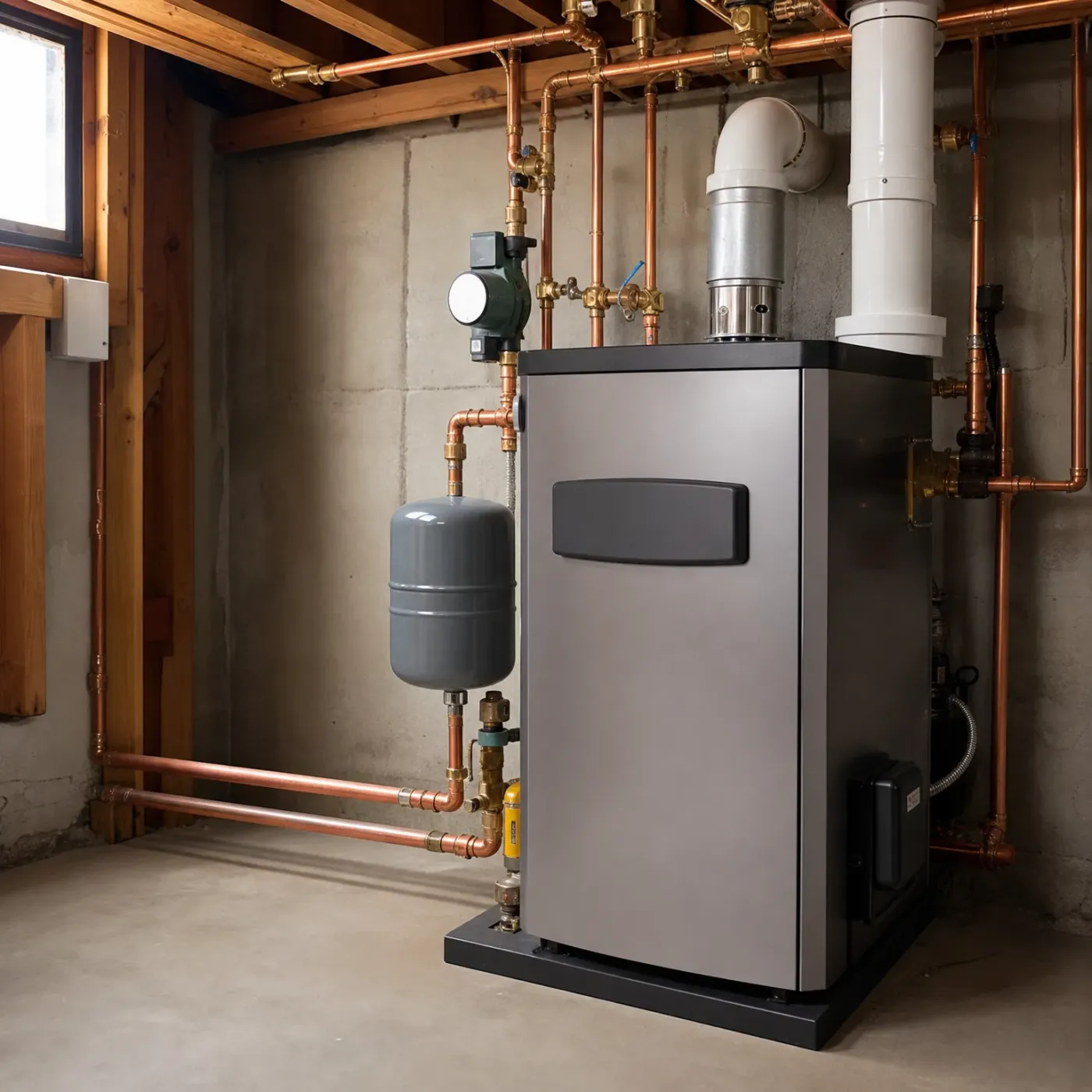
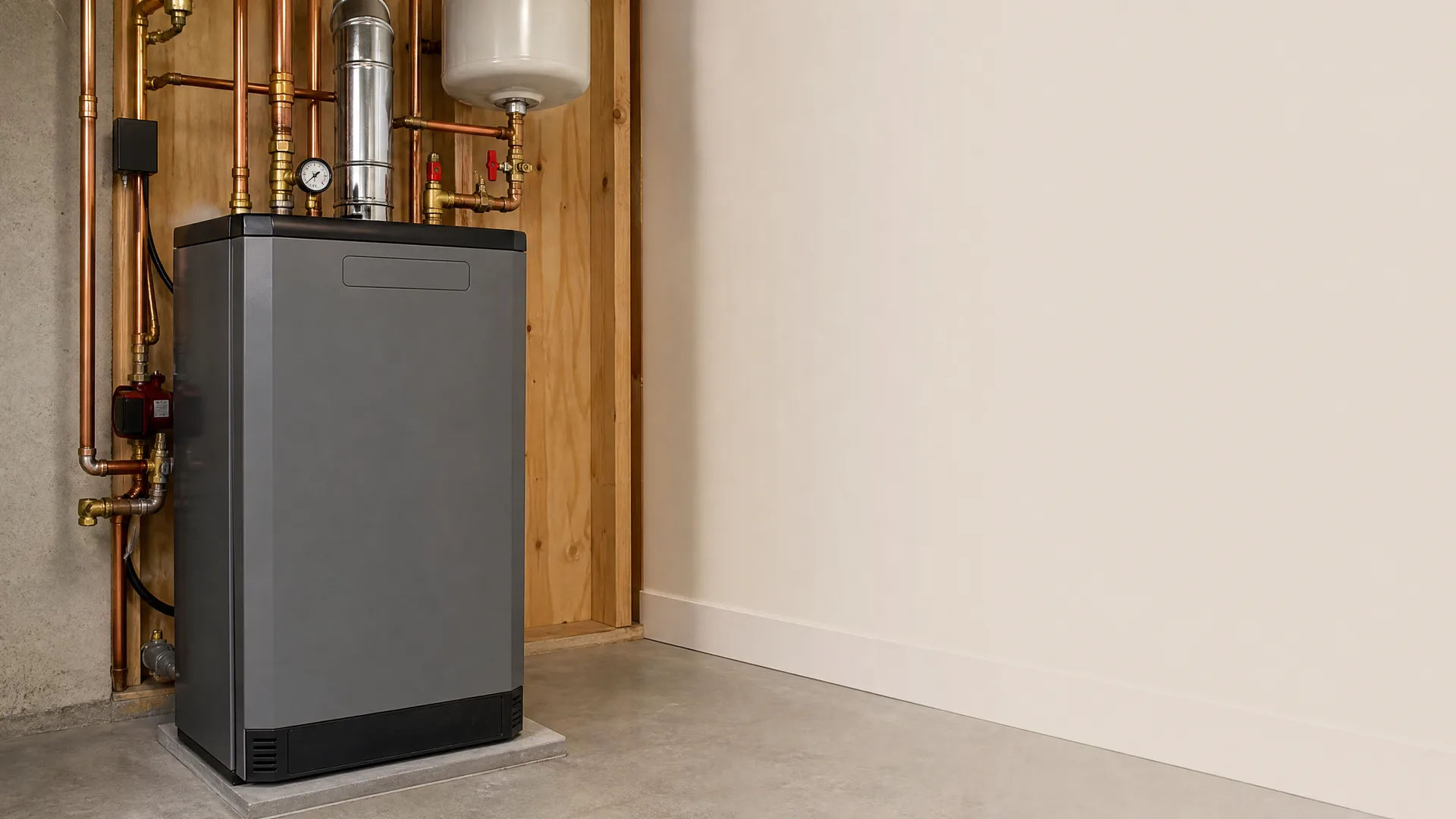
A dark grey floor-standing boiler on a concrete floor in front of a plywood wall, with copper pipes, valves, a pressure gauge, a flue pipe and a white expansion tank above it, beside a plain light-coloured wall.

Reading the gauge correctly

Most residential boilers run between 12 and 15 psi when the system is cold. The gauge sits on the front of the unit, often paired with a temperature dial. If the needle sits below 12, the system is low and won't circulate hot water through every radiator or loop evenly. Check it when the boiler hasn't run in a few hours, since heat expands the water and pushes the reading up on its own.

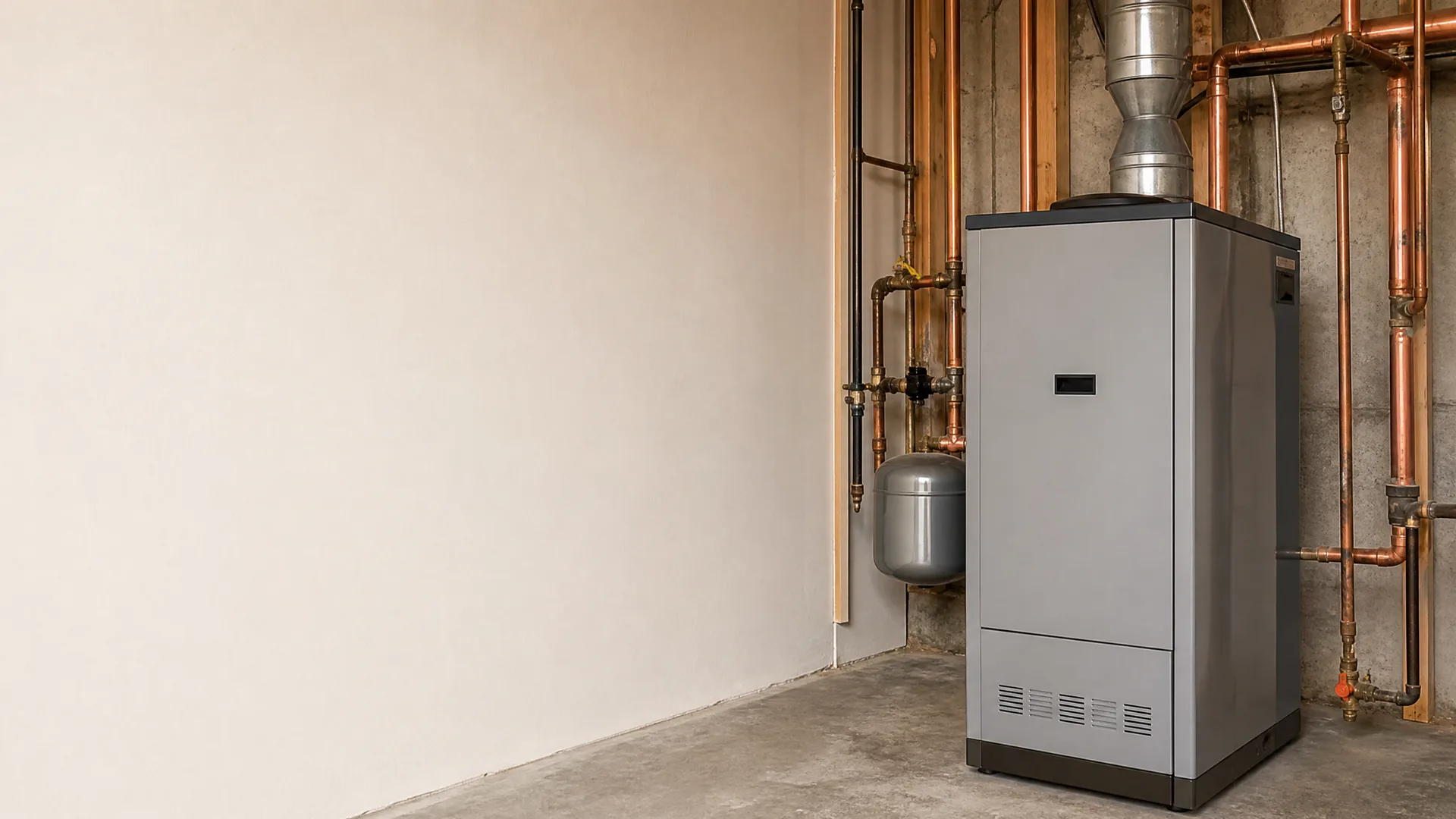
A gray boiler unit with a metal flue pipe stands in a basement corner, surrounded by copper piping and an expansion tank against a plain light wall and concrete floor.

Why pressure drops over time

A boiler loses pressure through small leaks at valves, fittings, or the pressure relief valve itself, and through air that gets trapped in the lines. Some water loss is normal over months of use. If you find yourself adding water every few weeks rather than every few months, something is letting water out faster than it should, and that's worth having a contractor look at before it turns into a bigger repair.

Too Low or Too High

Pressure too low

  • A gauge reading under 12 psi means water has been lost somewhere in the system, often a slow leak at a valve or fitting.
  • Low pressure lets air into the loop, and air in the lines causes the banging and gurgling some boilers make when they fire.
  • Radiators or baseboards that stay cold at the top while warm at the bottom usually point to low pressure, not a bad pump.
  • Topping off the loop yourself only helps if the leak is found first, or the pressure just drops again.
  • A boiler that repeatedly loses pressure over a few weeks has a leak worth tracking down before it gets worse.
  • Some boilers will lock out and refuse to fire at all once pressure drops far enough below 12 psi.

Pressure too high

  • A gauge reading above 15 psi puts steady strain on seals and joints that were built to hold a lower number.
  • High pressure can force the relief valve to open and drip, which looks like a leak but is really the valve doing its job.
  • A boiler that was recently refilled or bled can read high for a short time until it settles back down.
  • Pressure that climbs on its own, with no one touching the system, often means the expansion tank has failed.
  • Running high for months at a time shortens the life of gaskets and fittings that are only rated for the normal range.
  • If the needle sits above 15 every time you check it, the cause is worth finding rather than bleeding pressure off repeatedly.
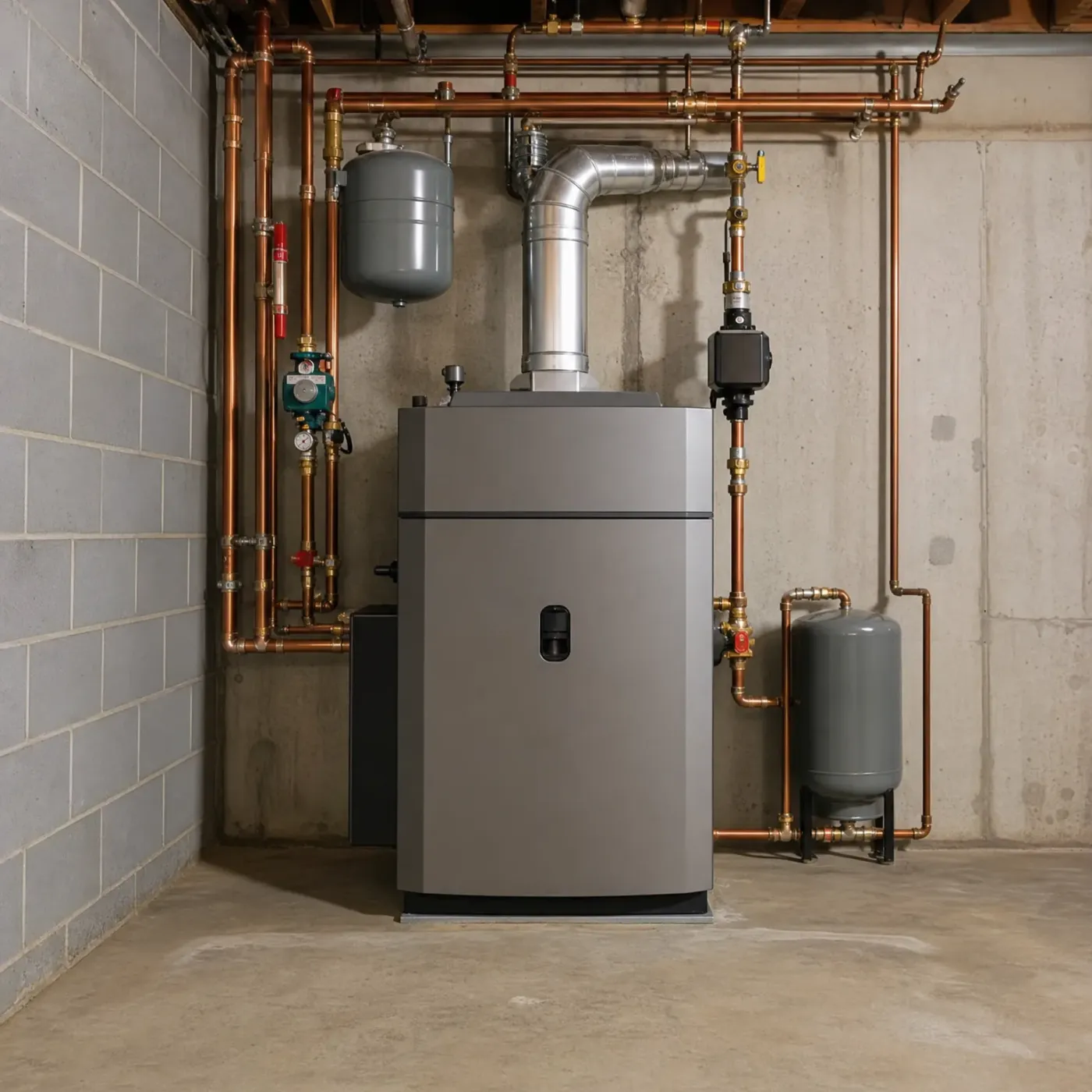
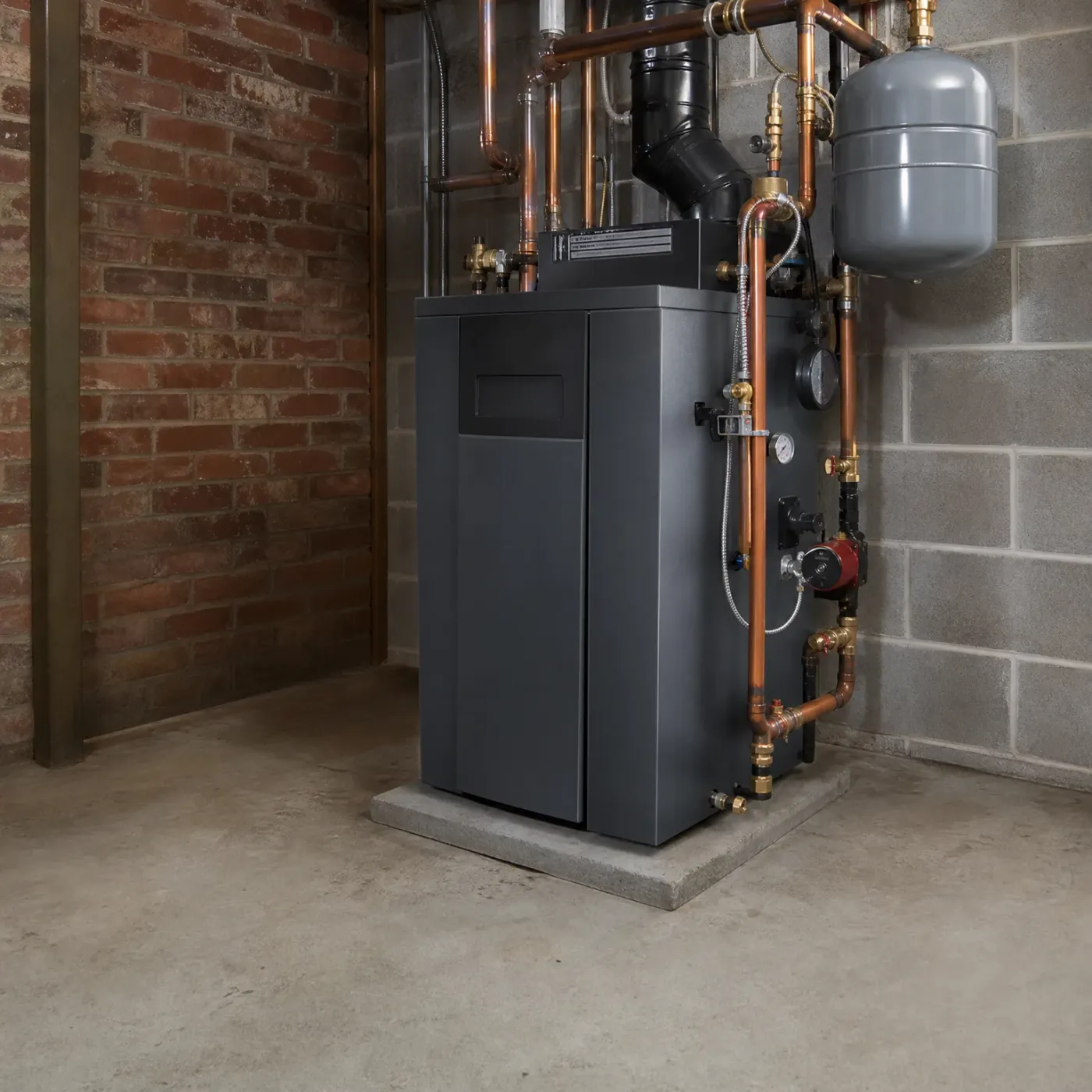
A dark gray floor-standing boiler on a concrete pad in a basement, connected to copper piping, valves, a circulator pump, a gauge, a black flue pipe, and a gray expansion tank, with a brick wall on the left and concrete block wall behind.

Pressure holding steady

A gauge sitting at 12 to 15 psi with the needle steady means the system is sealed and full. The expansion tank is doing its job, and the pipes and valves you see here aren't under any strain. A boiler that holds its pressure like this usually runs quietly, year after year, without surprises.
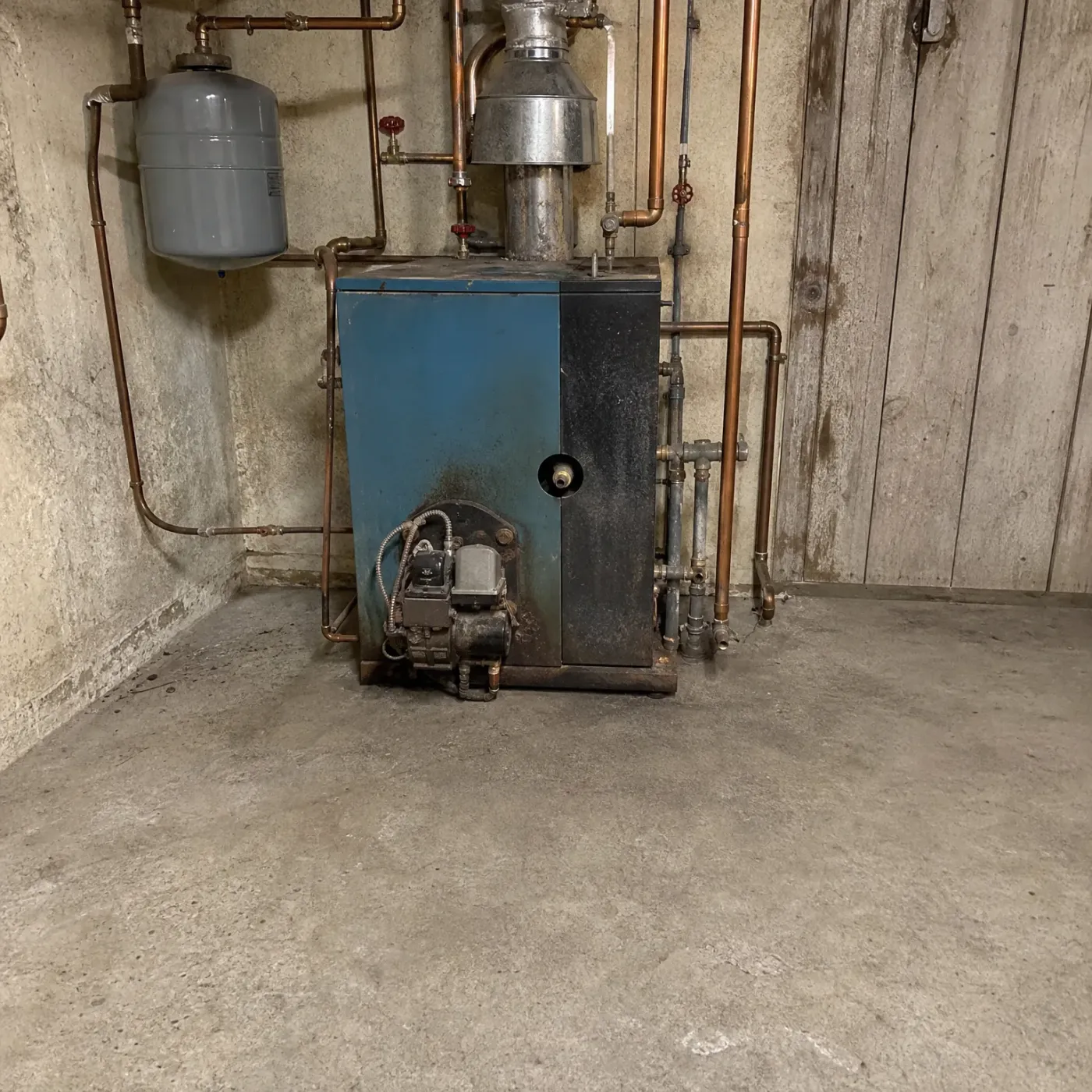

A blue and black boiler with a burner unit, flue, expansion tank and copper and steel piping stands on a concrete basement floor against a concrete wall and wooden plank partition.

Pressure that's dropped off

An older boiler like this one is more likely to have a slow leak at a valve or a fitting that's loosened over time. Once pressure falls below 12 psi, the system struggles to circulate hot water, and air can work its way into the loop. A local contractor who services boilers every season knows where these units tend to leak first.

A gray-haired bearded man in a dark coat and scarf dusted with snow stands smiling in a dimly lit entryway with a white front door, a side table with a lit lamp, an oval mirror, and a patterned rug.
An older bearded man in a dark snow-dusted coat and gray scarf stands just inside a dimly lit home entry, with a framed picture, lit table lamp, and an adjoining room with a fireplace behind him, and snow visible through the open door.
A gray-haired, bearded man in a dark snow-dusted coat stands smiling in a dimly lit entry hall with a staircase, a lit table lamp, a framed picture, and a living room visible through a doorway.
An older man with gray hair and a beard, wearing a dark jacket dusted with snow, stands smiling in a dimly lit hallway with lamps and a living room visible behind him.
A gray boiler on a black base in a basement with concrete walls, connected to copper piping, a circulator pump, a gray expansion tank, and white and metal flue vent pipes.

Get your boiler to the right pro

A licensed local pro takes the request for your boiler tune-up.

Describe your boiler job, and a local pro who handles it gets in touch.

Find a local pro

It costs nothing to send, and you don't have to hire anyone.

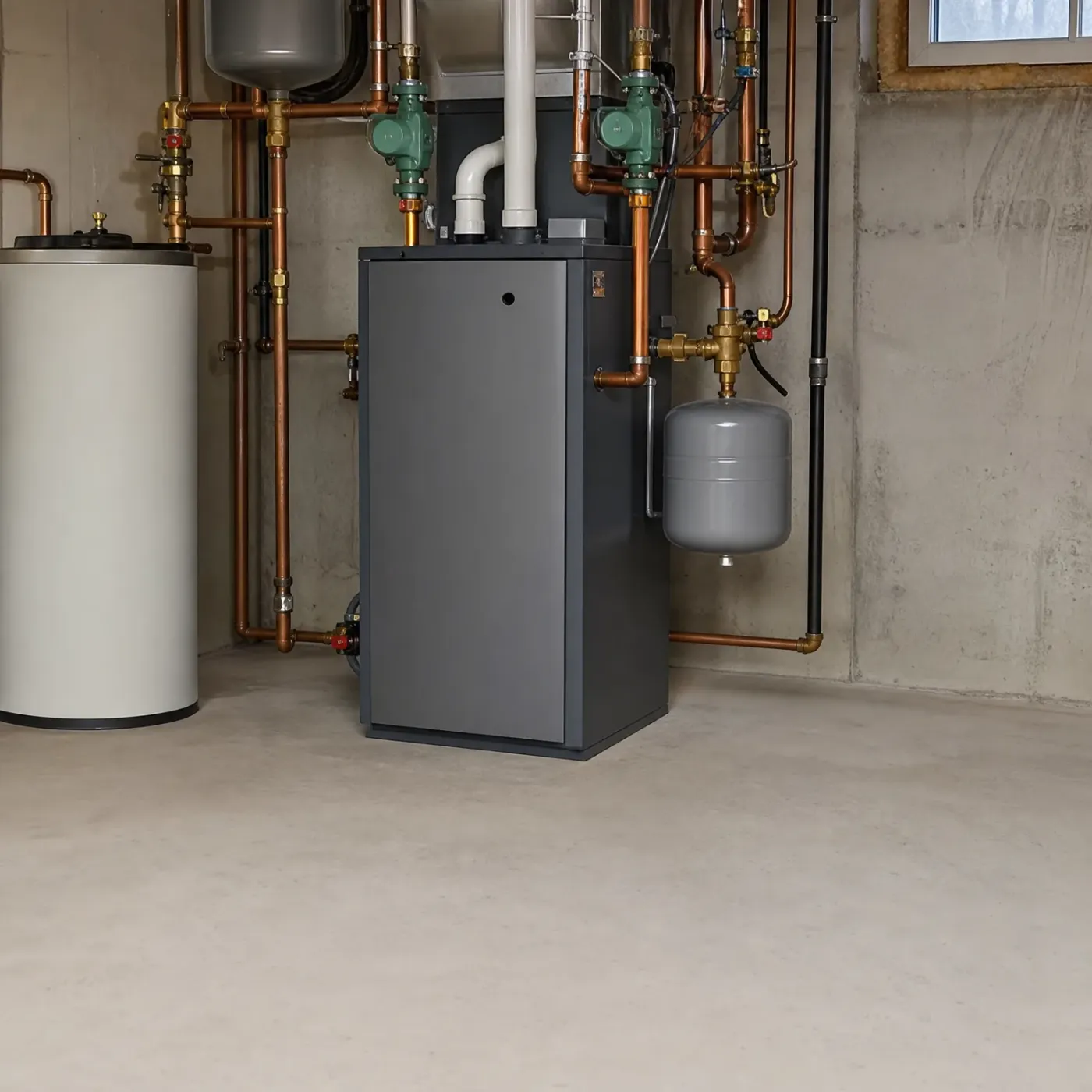
A dark gray floor-standing boiler in a concrete-walled basement, connected to copper piping, circulator pumps, a gray expansion tank, and a cream-colored storage tank to the left.
A boiler like this one holds pressure because every joint and fitting stays sealed tight, with no air getting into the loop.
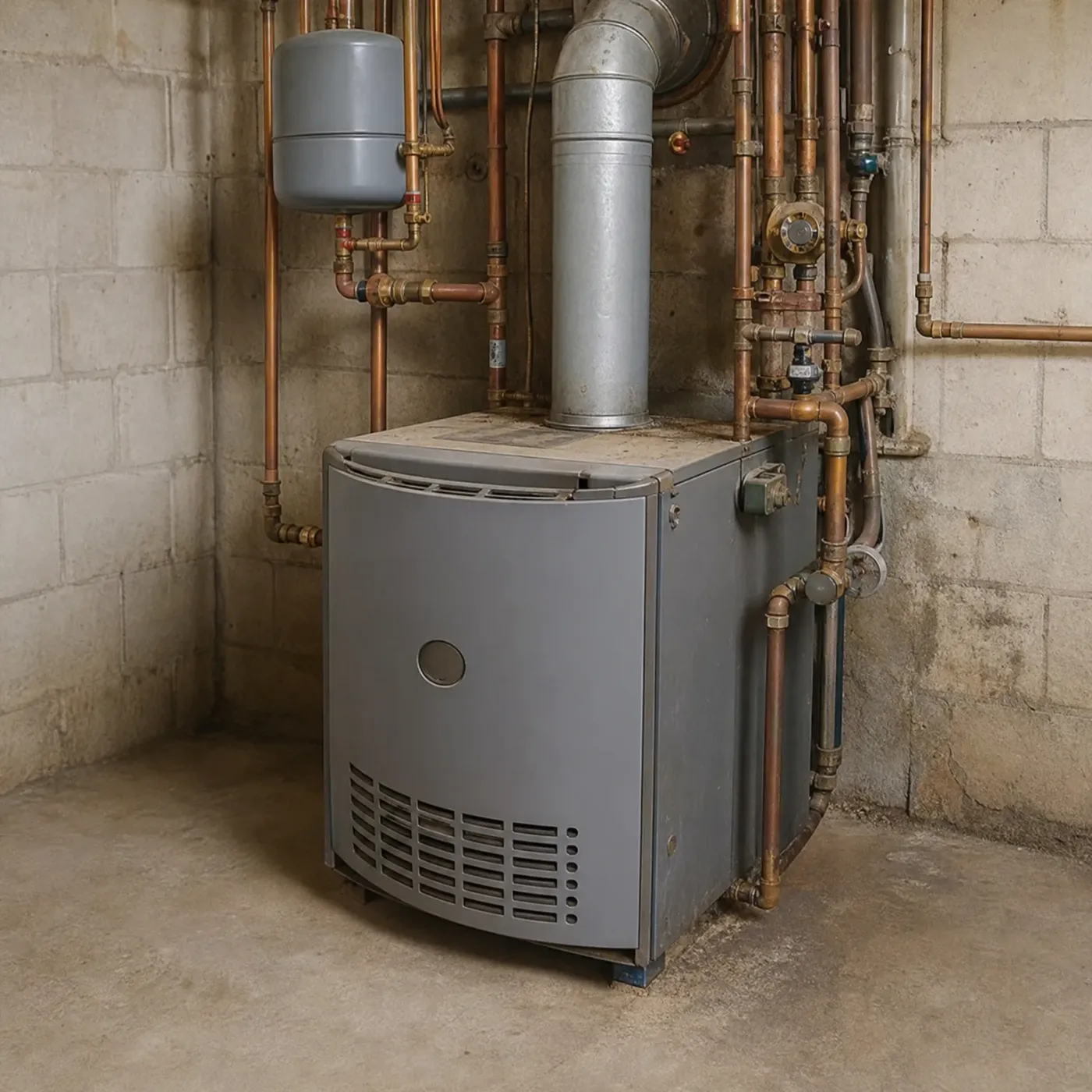
A gray residential boiler with a metal flue pipe stands in a concrete-block basement corner, surrounded by copper piping, valves and a gray expansion tank.
A flue pipe and fittings like these get checked for corrosion and leaks, since those are what let pressure drop over time.

How the pressure actually moves

  • The pressure relief valve opens on its own once the system climbs past about 30 psi, venting water to protect the boiler.
  • A float on the feed valve, or a manual fill valve on older units, is how water gets added back into the loop.
  • The expansion tank holds extra room for water as it heats and expands, which is why pressure rises when the burner fires.
  • Bleeding a radiator or baseboard loop releases trapped air but also drops system pressure, so the gauge needs checking after.
  • A pressure that creeps up on its own, without anyone touching the fill valve, usually points to a failing expansion tank bladder.
  • The auto-feed valve some boilers have will mask a slow leak by quietly topping off pressure, so the leak goes unnoticed.

The number on the gauge isn't fixed. It moves with the burner, and knowing why helps you tell a normal swing from a real problem. Cold water takes up less room than hot water, so when the burner fires and the loop heats up, pressure climbs. The expansion tank is what absorbs that rise, a sealed chamber with an air cushion that compresses as water pushes in. If that tank is doing its job, pressure should settle back down once the system cools. If it isn't, you'll see pressure creep upward on its own, with nobody near the fill valve, and that's usually the tank's bladder failing rather than anything you did.

On the other end, pressure can climb too high and the system handles that on its own too. Past about 30 psi, the relief valve opens and vents water out, which is designed behavior, not a malfunction, though it does mean you'll need to refill the loop afterward. That refill happens either through a float mechanism on newer feed valves or a manual valve you open yourself on older units.

Bleeding a radiator to clear trapped air does the same thing in miniature. You're letting pressure out along with the air, so check the gauge once you're done. And if your boiler has an auto-feed valve, know that it can hide a slow leak for a long time, quietly adding water so the gauge looks normal while the real problem goes unaddressed.

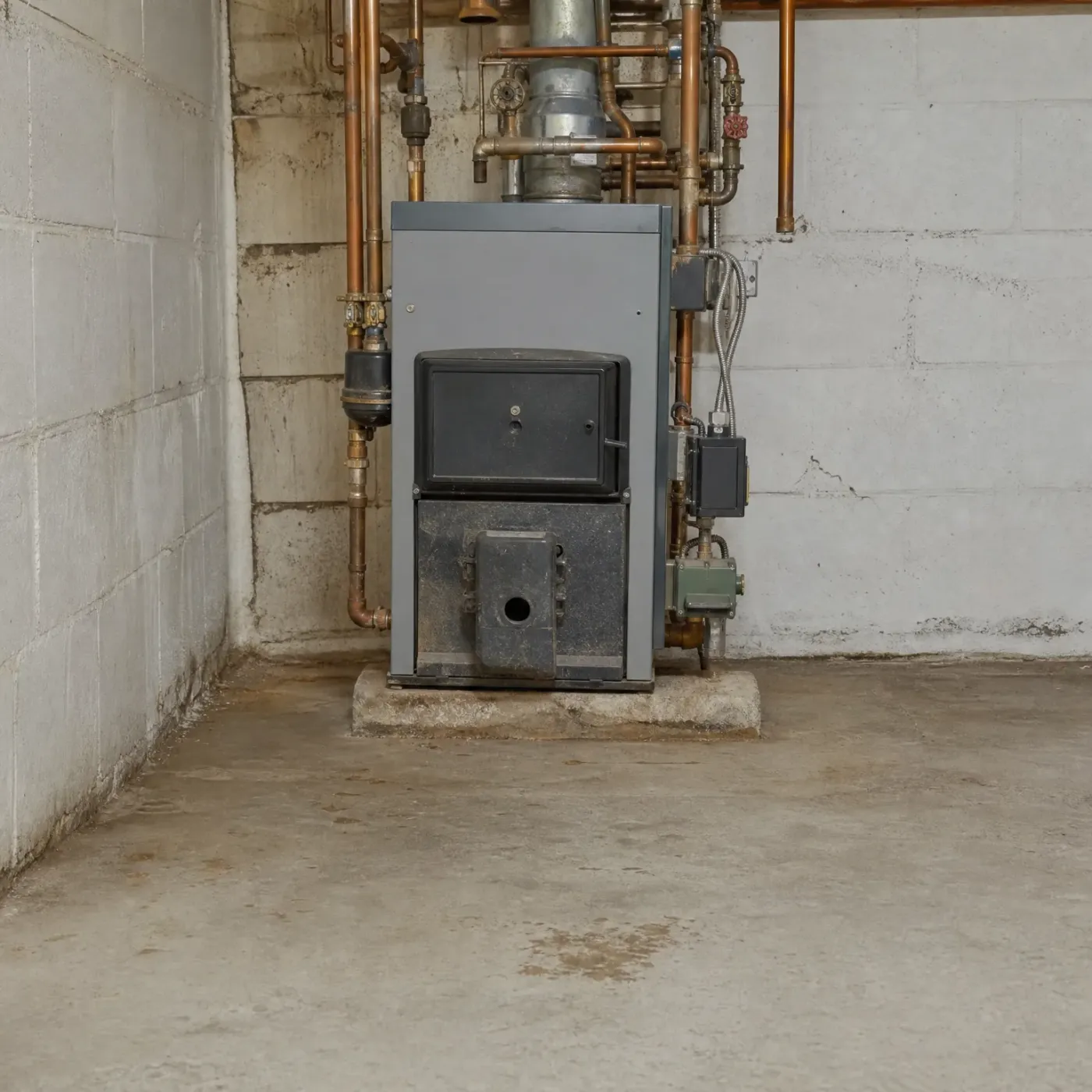
A gray boiler on a concrete pad in a basement with painted concrete block walls, copper piping, a metal flue, and electrical control boxes.
Before you get your boiler maintenance
A gray boiler with a metal flue pipe stands in a basement against concrete and concrete-block walls, connected to copper piping, a circulator pump, and two gray expansion tanks.
After you get your boiler maintenance

If your boiler keeps drifting below 12 psi, that's not a one-time fix, it's a leak somewhere in the loop that will keep coming back until it's found.

Left alone, a boiler that's lost its pressure will stop heating the house right when you need it, and one running too high is wearing on the seals every day it sits there.

A woman wrapped in a thick beige fleece blanket sits on a sofa with an open book on her lap, beside a lit table lamp, with a frost-covered window behind her.
An older woman with gray hair in a bun and glasses, wearing a beige knit sweater, smiles while looking to the side in a warmly lit kitchen, with a loaf of bread on the counter in the foreground and a snowy scene outside the window.

Winter nights average 39°F statewide

With overnight lows only dropping to about 39°F in winter here, your boiler isn't working against hard freezes most nights. It still needs to hold pressure between 12 and 15 psi to circulate properly whenever it does kick on.

NOAA nClimDiv 1991-2020 county normals weighted by homes

  1. Cold water fills the loop until the gauge reads 12 to 15 psi.

  2. The pump circulates that water through the pipes to each radiator.

  3. Heat moves from the water into the house as it circulates.

  4. The expansion tank absorbs water as it heats and expands.

A woman in a cream cardigan and jeans stands with one hand raised facing an open front door of a gray horizontal-siding house, with a black lantern wall light, a potted shrub with yellow flowers, and a stone-faced porch column.

What this means for your house

A boiler in an Arizona house is often an older piece of equipment nobody's touched since it was installed, since so few homes here lean on one to begin with. That makes it easy to miss a slow pressure drop until a cold snap in December or January sends you downstairs to find the radiators barely warm. The fix usually isn't the boiler itself. It's a fitting or valve somewhere in the loop that's let water out a little at a time, and finding that spot in your specific system takes someone who's actually traced these lines before.

If your gauge is holding at 12 to 15 psi, that's worth confirming now rather than waiting for a cold morning to tell you otherwise. A contractor local to your area, matched to your boiler and how it's set up, can check the pressure, the feed valve and the expansion tank in one visit and tell you what's normal for your system specifically. You'd be working with one contractor who knows this equipment, not fielding calls from several.

Interior corner of a room with a window and sheer curtain at left, a gray upholstered sofa with a cushion at right, and a round wooden table holding stacked books and a round vase with an olive branch.
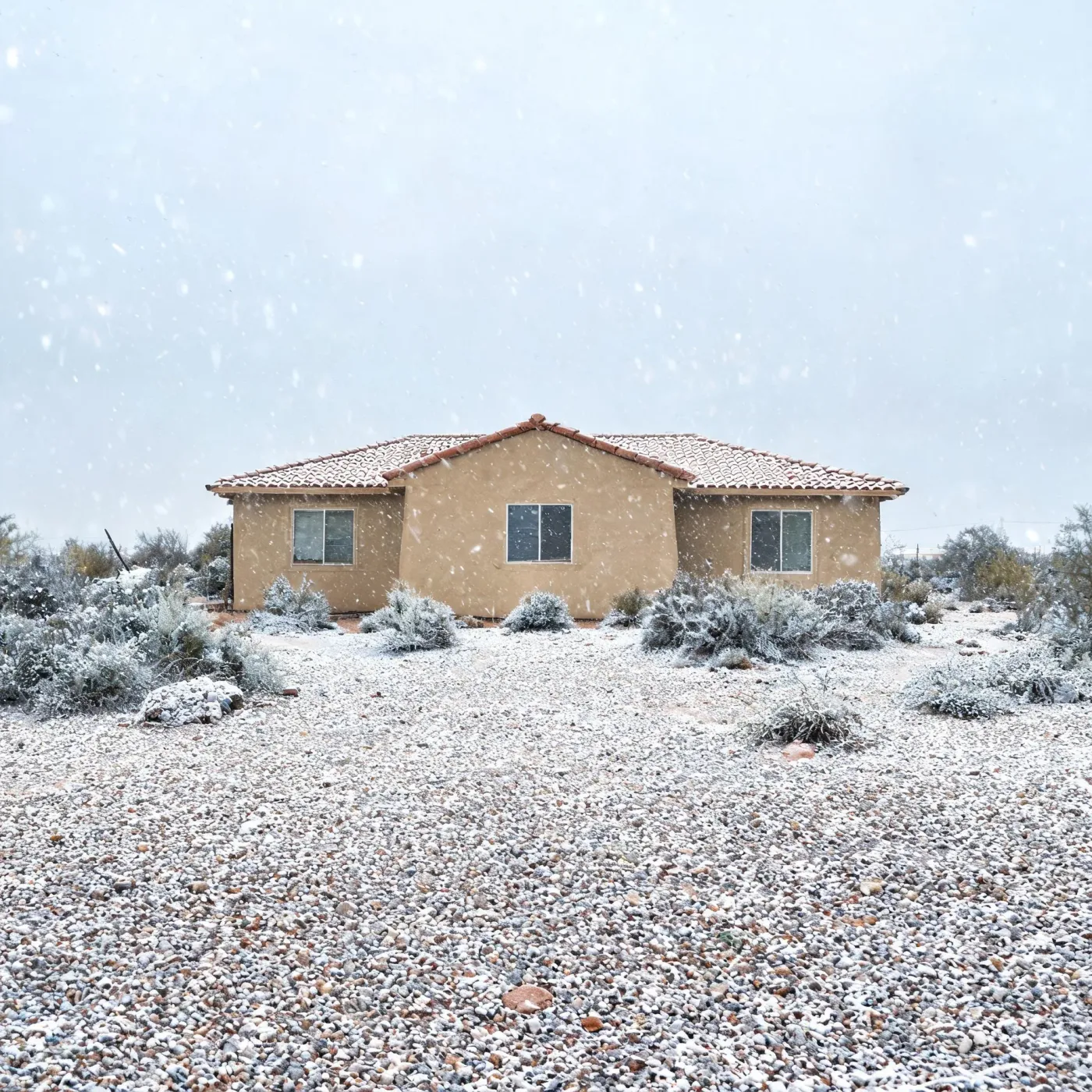
A single-story tan stucco house with a tile roof stands behind snow-dusted desert shrubs and a gravel yard during falling snow.

Arizona doesn't put much strain on a boiler. Statewide, winter nights average 39°F, according to NOAA climate data, so the system isn't cycling against hard freezes the way one back east would. But that also means a slow pressure drop can sit unnoticed for a long stretch, since the boiler isn't running often enough for you to catch a problem early. If you only turn the heat on for a handful of cold snaps, check the gauge each time before you do. A reading under 12 psi before the first cold night of the season means it needs water, not just a glance once the house already feels cold.

NOAA nClimDiv 1991-2020 county normals weighted by homes

Keep the gauge between 12 and 15 psi and the boiler will heat the way it's supposed to. Below that, water has gotten out somewhere in the loop. Above 30, the relief valve will open on its own to protect the system. That's the whole answer, and checking it takes a glance at the gauge on the front of the unit. Because a boiler is uncommon equipment in an Arizona house, a lot of them sit for years without anyone looking closely at the pressure or the valves around it, which is exactly how a slow leak goes unnoticed until a cold morning. A contractor who works on boilers in this state regularly has seen what usually goes wrong with the ones that don't get checked, since there are fewer of them here than furnaces or heat pumps. Getting matched with one means a single licensed technician local to you looking at your system, rather than your information going out to several companies at once. If your boiler's gauge is reading outside 12 to 15 psi, that's worth having looked at before the next cold snap.

A wooden front door with six small glass panes and a narrow sidelight, set in a shingled house entry with white trim, reached by stone steps flanked by a planted urn with purple flowers and leafy branches in the foreground.
Exterior corner of a house with beige horizontal lap siding and a black-framed window, with white hydrangeas, ornamental grasses and low plantings along a flagstone patio.
Corner of a house with tan lap siding and a window, a brick step edge, flowering white hydrangeas and green shrubs beside a flagstone walkway leading to a white picket fence and a tree in backlit sunlight.
House exterior with cream horizontal lap siding, a dark-framed window, a black wall lantern beside a wood door, potted shrubs on stone steps, and white and pink hydrangeas in the foreground garden.
Corner of a cream lap-sided house with a white-framed window and dark shingled roof, beside a white-flowering hydrangea shrub, a clipped hedge, mulched bed and lawn.

The right pro for this job

The pro who reaches out is licensed in Arizona.

Get a licensed local pro

No charge to send it. You decide if you hire them.