
How long a boiler lasts in Arizona

Skip collecting and comparing quotes for the new boiler.

Skip the calls

A boiler in Arizona typically lasts 15 to 20 years, often longer than the same unit would in a colder state. Most homes here heat with electricity, so a boiler usually runs only on the coldest nights rather than for months straight, and that lighter workload is easier on the heat exchanger and the pump. The heat itself isn't what shortens a boiler's life. Hard water and mineral buildup inside the tank and pipes do more damage over time than the hours spent running. If yours is approaching 15 years, the question becomes whether it still heats evenly and holds pressure, not just whether it still turns on. A boiler near the end of its life often keeps limping along before it fails outright, which is why it matters to have someone look at it rather than wait for a breakdown in the middle of winter.

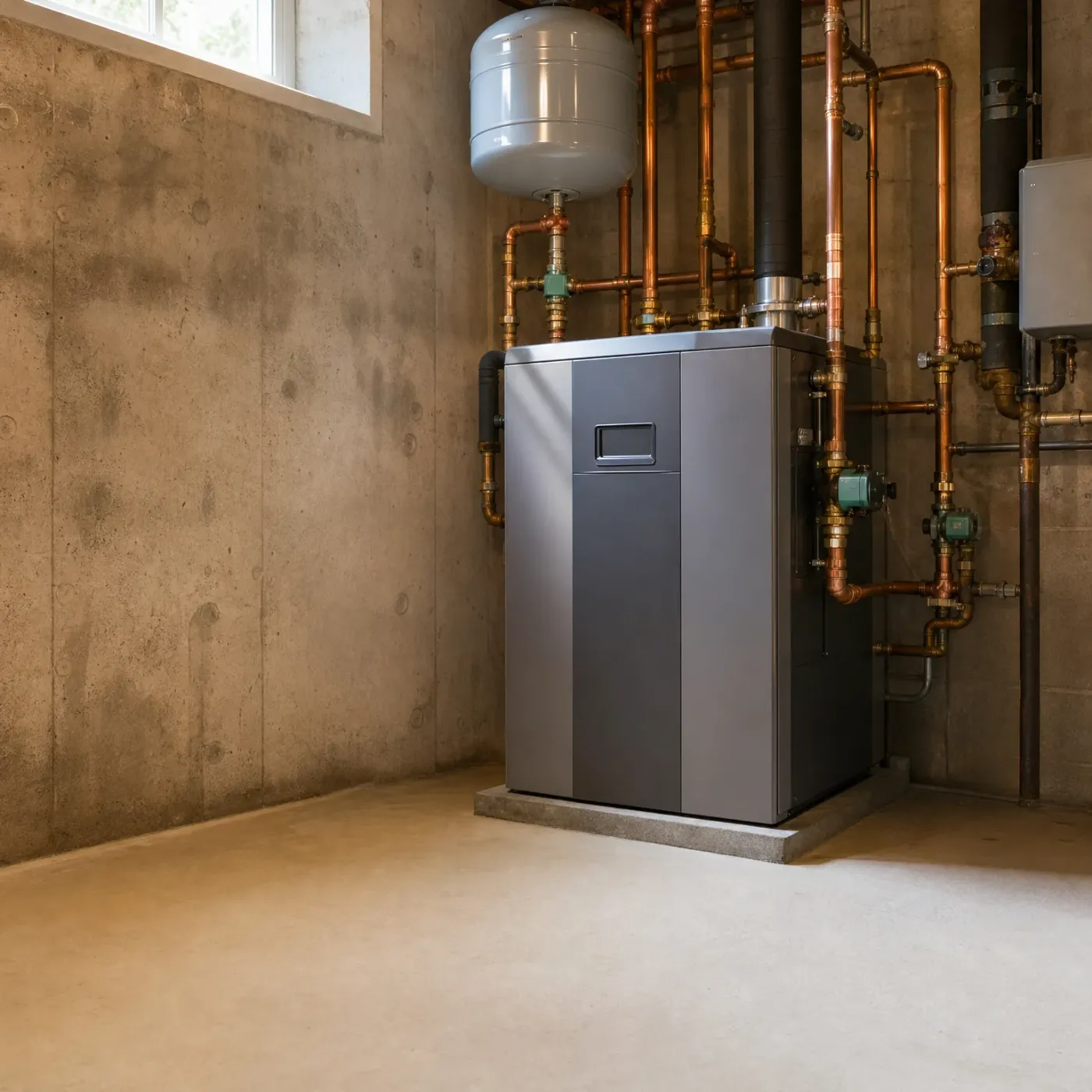
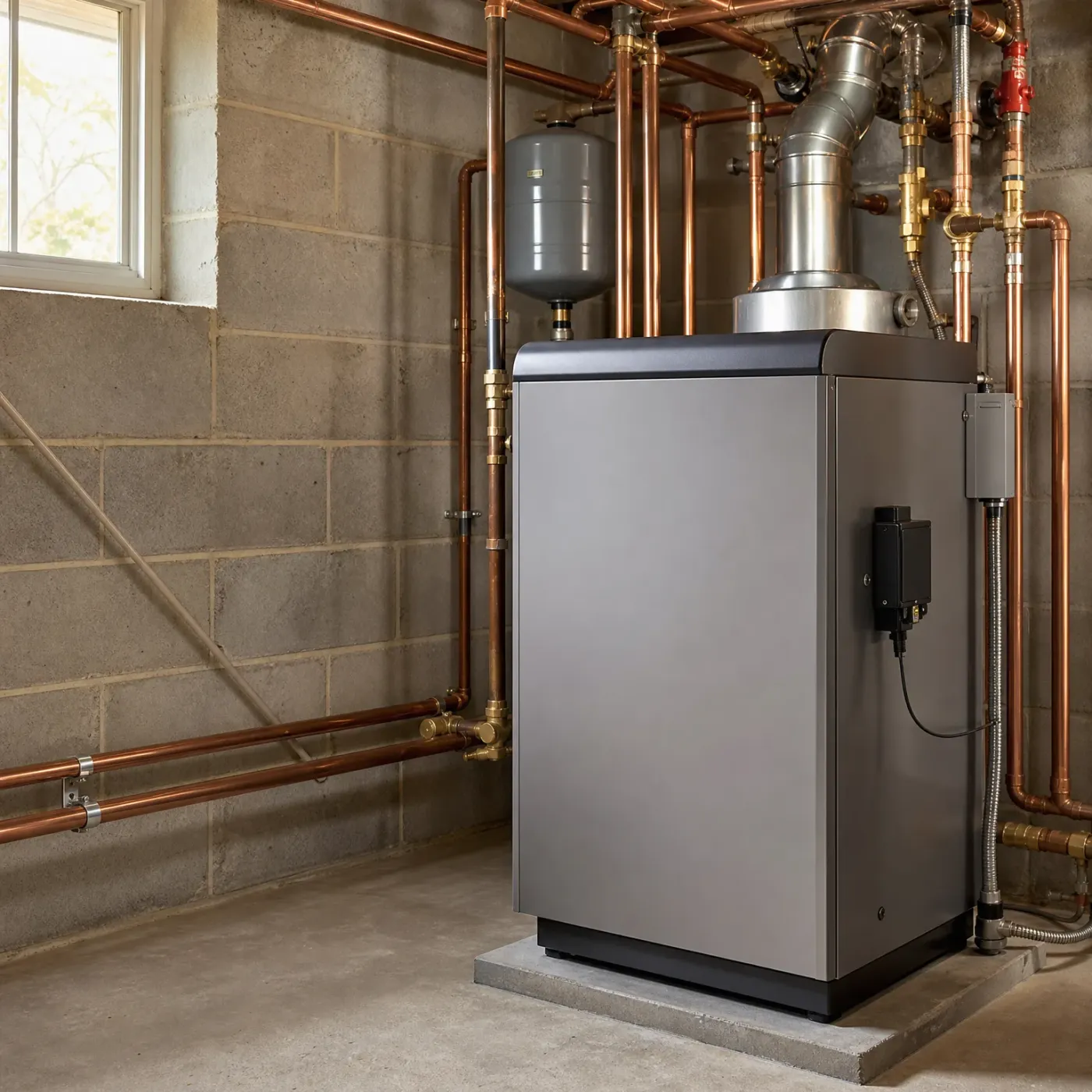
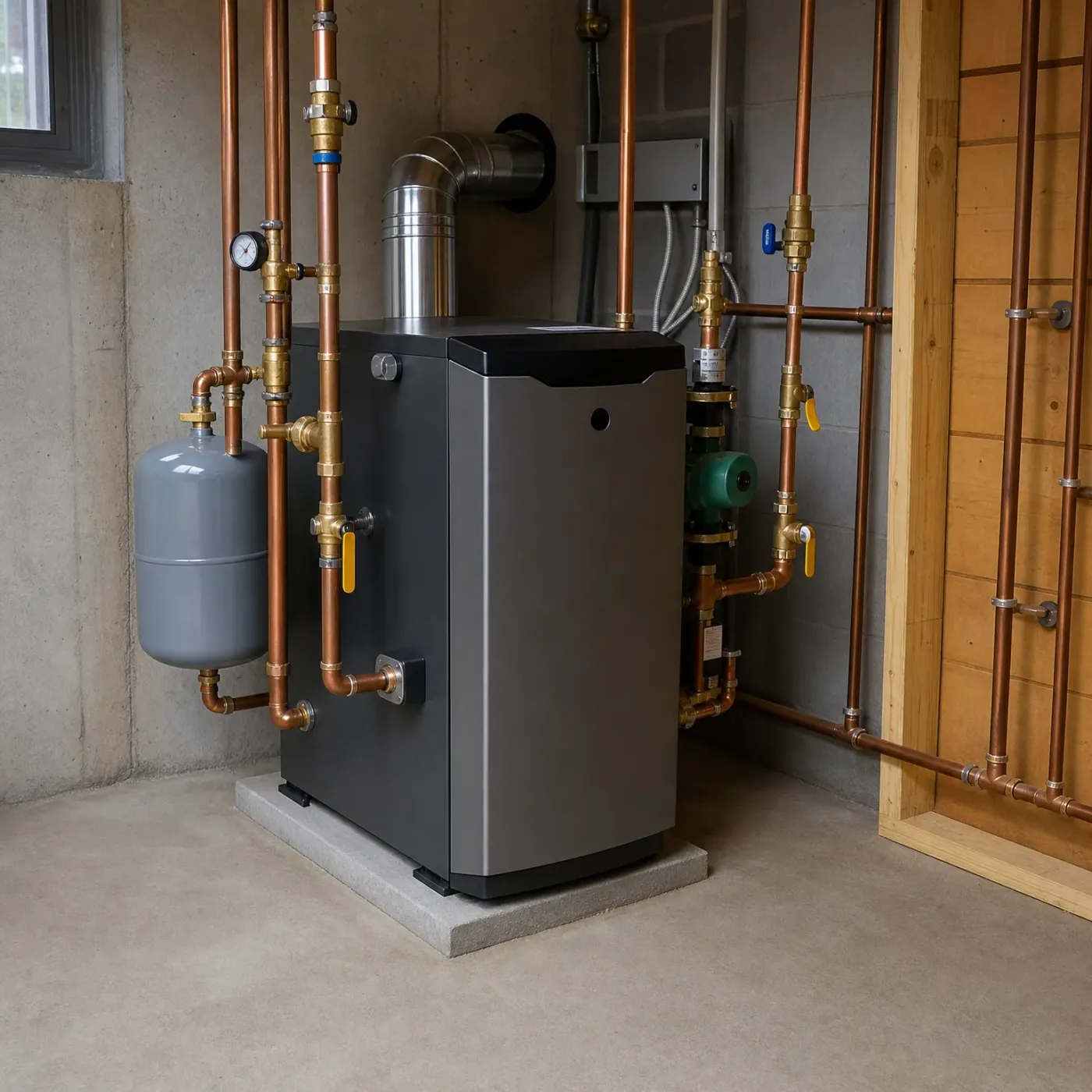
A dark gray floor-standing boiler on a concrete pad in a basement, surrounded by copper piping, brass valves, a gray expansion tank, a circulator pump, and a metal flue pipe against concrete block walls.

Running clean

This is a boiler in good shape: tight copper lines, brass fittings holding pressure, a clear gauge reading where it should. Arizona's dry air helps here. Less moisture around the cabinet and piping means less corrosion working on the metal over the years, which is a big part of why these units run as long as they do.
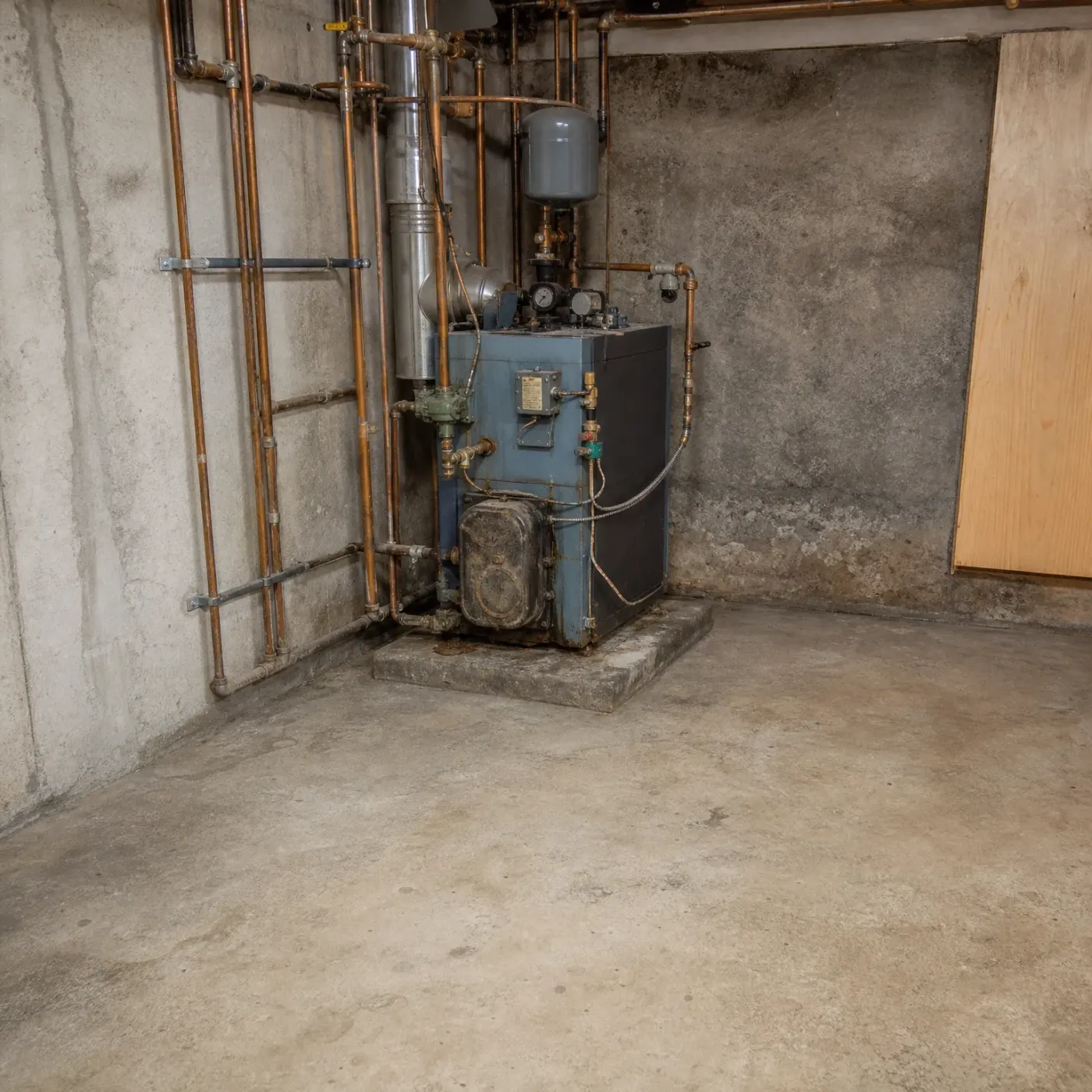

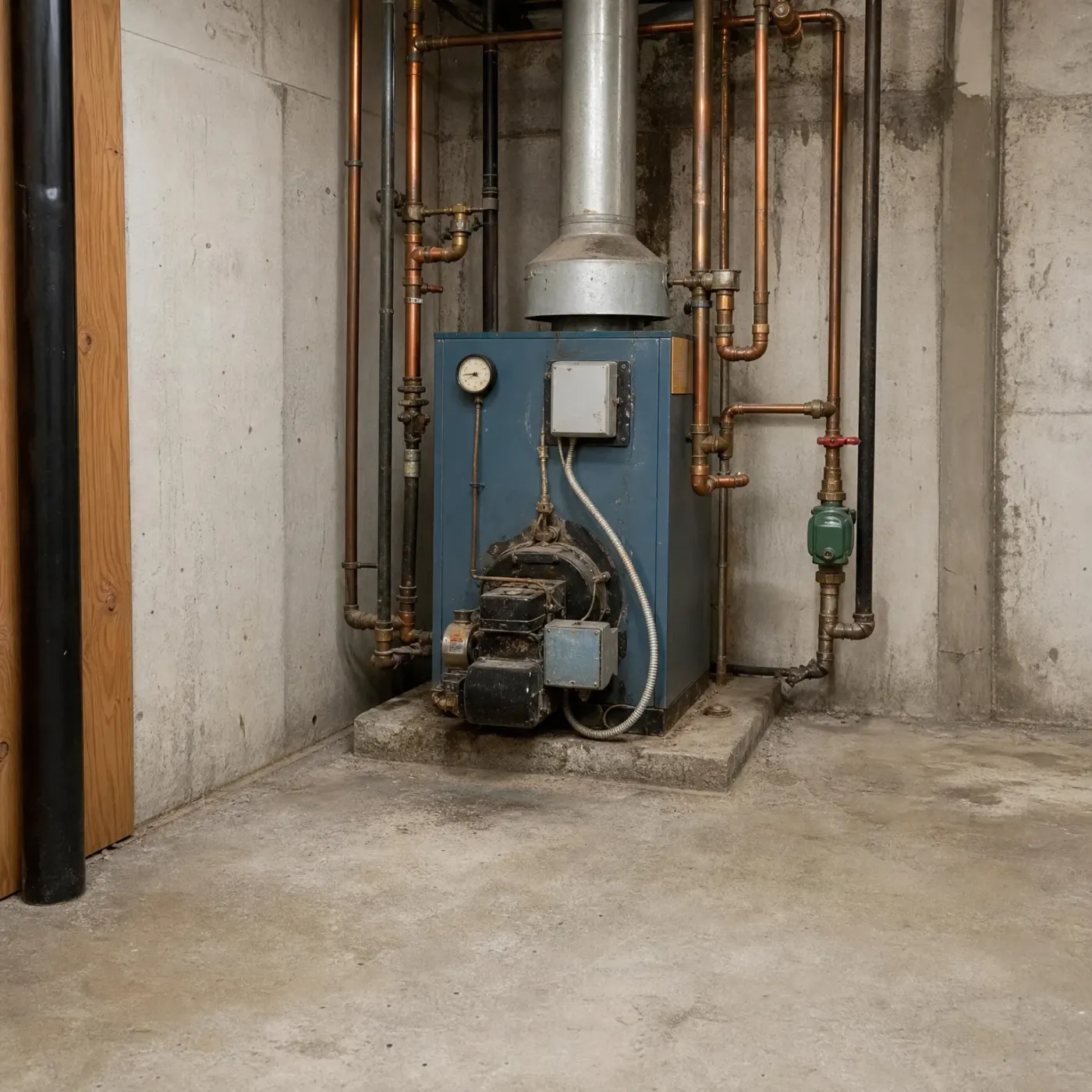
A blue boiler on a raised concrete pad in a basement corner, with copper and steel pipes, a gauge cluster, an expansion tank, and a metal flue running up the bare concrete walls.

On its way out

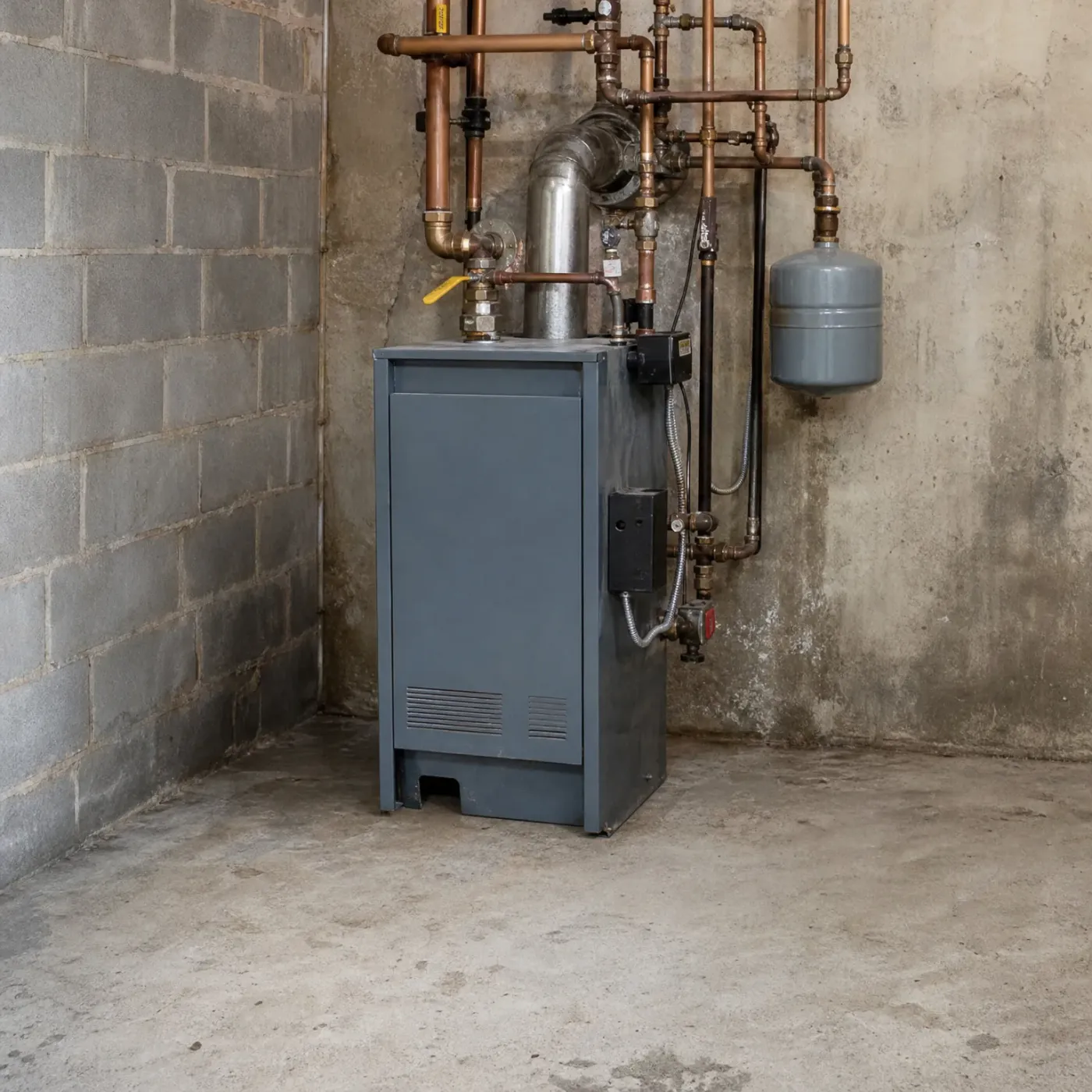
Bare concrete, an old flue vent, a casing that has seen twenty winters of light use. When a boiler this age starts short-cycling or the pressure won't hold, it's not worth chasing one fix after another. A local contractor who works on these year-round can tell you quickly whether it's a repair or time to replace it.

Repair It or Replace It

Keep repairing

  • A circulator pump or a zone valve replaced now costs less than a new boiler, and either part can be swapped without touching the rest of the system.
  • If the heat exchanger and gas valve still check out sound, there's no reason to pull a boiler that's only failing at its edges.
  • A boiler that still holds pressure and fires clean after a repair can usually make it another winter or two before anything else gives out.
  • Since Arizona asks less of a boiler than a colder state would, a repair here tends to hold longer than the same fix would up north.
  • Waiting out a single repair costs you one call and one fix, not the time and expense of a full install.

Replace now

  • Once the heat exchanger itself is cracked or leaking, no repair brings that back, and the unit needs to come out.
  • A boiler running past 15 to 20 years is near the end of what that equipment is built for, repair or not.
  • Stacking up more than one repair in a short stretch usually means the next failure is already close behind.
  • A new boiler installed correctly from the start means one less thing to track for years, instead of watching for the next part to go.
  • Finding someone to install it right matters as much as the equipment itself, since a bad install shortens the life of even a good unit.
  1. Cold water enters the boiler through the fill valve

  2. The burner or element heats water in the tank or exchanger

  3. A circulator pump pushes hot water out to the system

  4. Water gives up heat through radiators or baseboard units

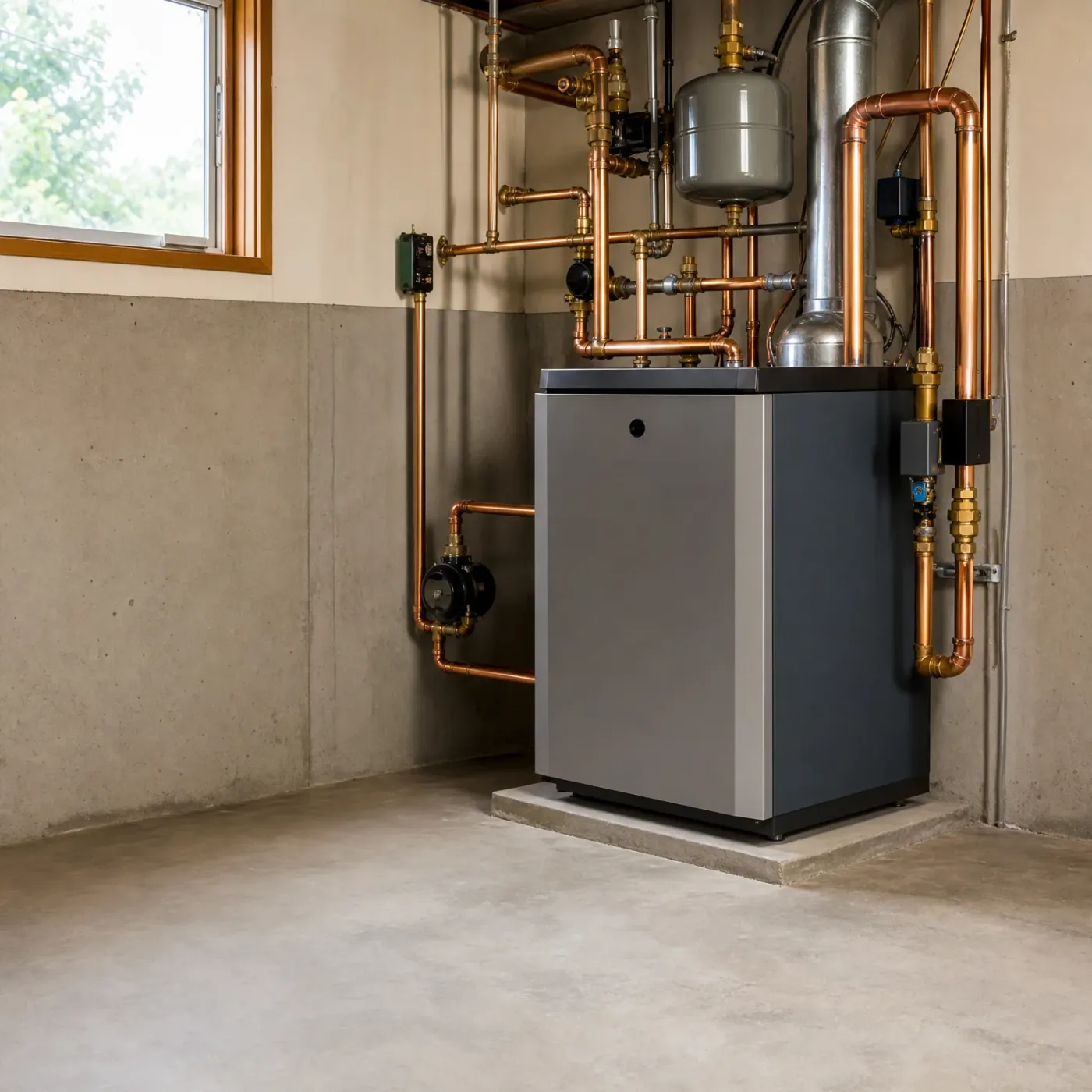
A gray boiler unit on a concrete pad in a basement corner, connected to copper piping, circulator pumps, and a ceiling-mounted expansion tank against bare concrete walls.
Copper lines run tight to the wall, pumps mounted clean, gauge holding steady at the pressure it should.
A blue oil-fired boiler with a pressure gauge, burner unit and metal flue sits on a concrete pad in a basement corner, surrounded by copper and black pipes against bare concrete walls.
A flue duct this size and a gauge this worn point to a heat exchanger working harder than it used to.

You'll own this boiler for most of the years you own the house, so the condition it's in now is the condition you'll live with for a long stretch. Because it only runs hard a few nights a year, a problem can sit quiet for months. A zone valve or circulator pump wears out the same way it would anywhere, and when it does, you'll likely find out on one of the colder nights, when the system is actually asked to work. That's a part a qualified contractor can replace without pulling the whole unit. A heat exchanger is a different matter. If one corrodes late in the boiler's life, there's usually no separate part to swap in, and replacement becomes the only option. Arizona's dry air is doing you a favor in the meantime, since it slows the rust and scale that wear down boilers faster in damp climates. Still, a gauge that won't hold pressure or a flue duct that looks worn is worth having looked at before the next cold snap finds the weak point for you.

What this means for your house

  • A boiler running 15 to 20 years here means you're likely dealing with the same unit for most of the time you own the house.
  • On the coldest nights your heat has to work, a circulator pump that sticks or a zone valve that fails leaves rooms cold until someone finds the part and fits it.
  • A corroded heat exchanger late in the unit's life usually means replacement, not repair, since the part isn't sold separately from the boiler.
  • Dry Arizona air works in your favor by slowing the rust and scale that shorten a boiler's life in wetter climates.
  • A gauge that won't hold steady pressure or a flue duct showing wear are signs worth having checked before they become a breakdown on a cold night.
  • Since the boiler only runs hard a few months a year, a failing part can sit unnoticed until the first cold snap puts real demand on it.
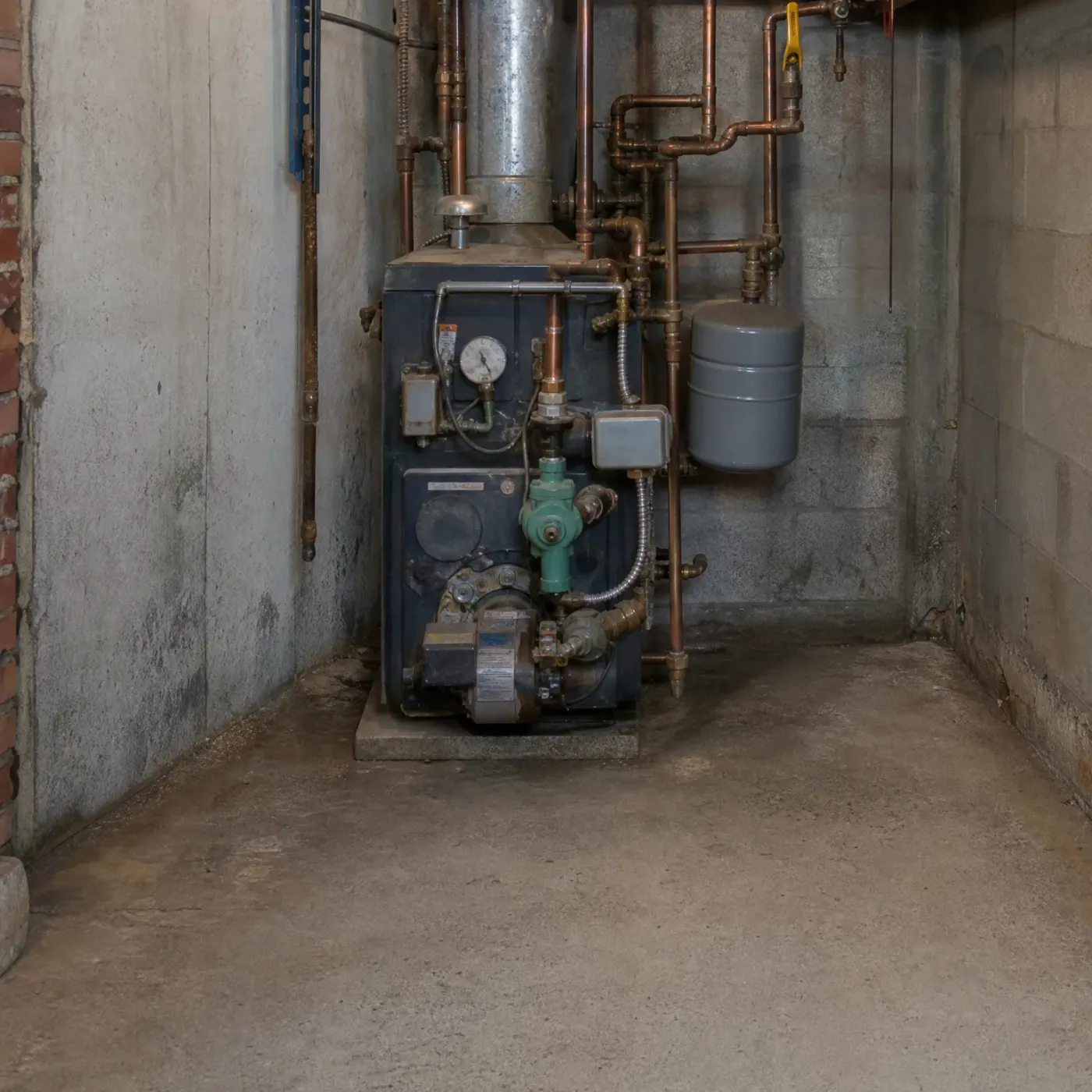
A dark cast-iron boiler with copper piping, pressure gauge, and a gray expansion tank sits on a concrete pad in a basement corner with concrete block and brick walls.
Before you get your boiler installation
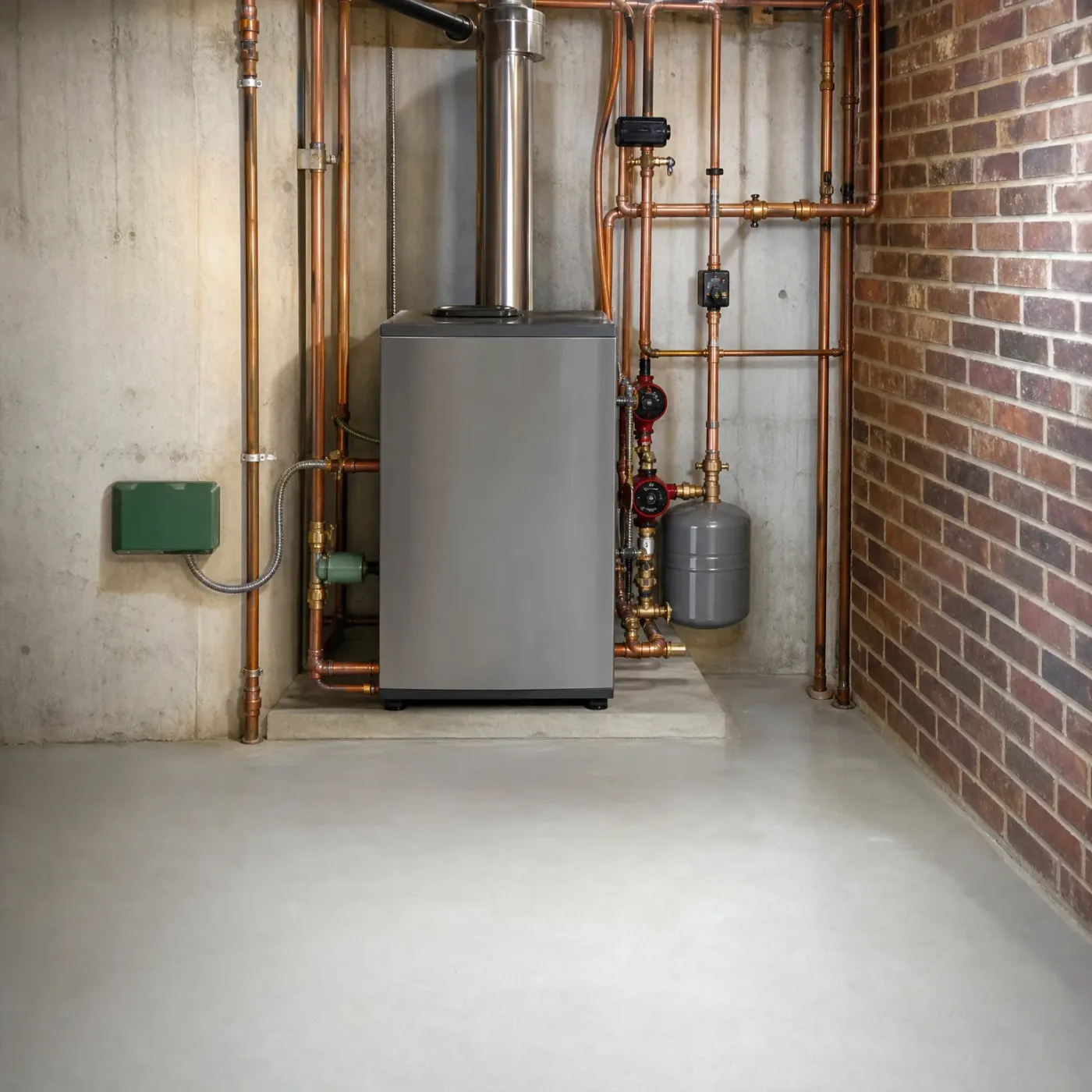
A gray boiler on a concrete pad in a basement, connected to copper piping, valves, pumps and a gray expansion tank, with a concrete wall on the left and a brick wall on the right.
After you get your boiler installation
A gray floor-standing boiler on a concrete pad in a basement with concrete block walls, connected to copper piping, a flue vent, and an expansion tank.

Skip calling around

Your request stays with one local pro.

Fill out one short form instead of calling around.

Answer a few questions

There's no charge for the request.

Why does my boiler only kick on at night in the winter?

Why does my boiler only kick on at night in the winter?

It's sized for the cold, not the whole day

Most homes here heat with electricity, and the boiler is there for the nights that get cold enough to need it. Once the outdoor temperature drops, the thermostat calls for heat, the burner or element fires, and the circulator pump sends hot water out to the radiators or baseboard units until the rooms recover. During the day, when it warms back up outside, there's no call for heat and the boiler sits idle. That on-and-off pattern, rather than running steady for months, is exactly what lets a boiler here reach 15 to 20 years. A unit that cycled on and off through a long, hard winter every year would wear through its parts faster.

A man with grey hair and stubble in a dark sweater sits on a grey sofa indoors, looking off to the side, with a potted plant and a sunlit window behind him.
A man with gray hair, a beard and glasses, wearing a dark green sweater, sits on a gray sofa in a sunlit living room with a potted plant, table lamp and wooden sideboard behind him.
A middle-aged man with graying hair and a short beard sits on a blue sofa in a living room, looking toward a window, with a bookshelf, lamp and framed picture in the background.
A man with graying curly hair and a dark green sweater sits on a gray sofa in a sunlit living room, looking off to the side, with a framed picture, shelving, an armchair and a window with sheer curtains behind him.

15 to 20 years

That span assumes someone checks the pressure, the venting and the exchanger along the way. A tech who installs these every season knows what to look at first.

Describe it once

One call, not five

A licensed local contractor takes the job instead of you calling around and repeating the same details to several companies for quotes.

Describe it once

Is your boiler telling you something right now

Walk past it some morning and notice what it's doing. A knock or a rumble from the tank as it heats up usually means sediment sitting on the bottom, making the water work harder to warm through. A pilot or igniter that takes two or three tries before it catches is wearing out. Water pooling at the base, even a small damp spot, means a seal or fitting has given way somewhere inside. Rooms that used to warm up fast now take longer on the coldest nights. None of this means the boiler is finished, but ignoring a leak or a failing igniter through a cold snap can leave you without heat on the one night you need it most.

A gray floor-standing boiler on a concrete pad in a basement corner, connected to copper piping, brass valves, a circulator pump, an expansion tank, and a metal flue, with a window at upper left.

What a sound system looks like

Copper lines run tight against the wall, fittings dry and holding pressure, the circulator pump mounted clean. The gauge sits where it should. A flue vent this clear and pipework this tidy means the system is moving heat the way it was built to.

A gray floor-standing boiler in a basement corner with copper and black piping above it, a flue vent, and a gray expansion tank mounted on the concrete wall beside a concrete block wall.

What a struggling one looks like

The piping still runs but the cabinet shows its age, and a gauge reading off from where it should be often means the pressure isn't holding the way it used to. A boiler in a corner like this one is worth a second look before the next cold night finds the problem for you.

Winter nights average 39°F statewide

A 39°F night is the kind your boiler is built for here. It doesn't need to hold heat all day, just bring the water up fast when the temperature drops after dark and let the system coast once the sun's back out.

NOAA nClimDiv 1991-2020 county normals weighted by homes

Replace it on your schedule

If your boiler is already past 15 years and still running fine, you get to pick the timing. A planned install happens on a day that works for you, with time to compare what a new unit offers before anything fails. A tech who works on these every winter can walk through the current unit with you, tell you what's holding up and what isn't, and help you decide if this is the year or if it can wait one more season.

Wait for it to fail

Boilers in Arizona often run past 20 years, so some homeowners wait until the heat exchanger or gas valve actually gives out. That usually means it quits on one of the colder nights, when you need it most, and the house is cold until someone gets out to look at it. There's no urgency to replace a unit that's still heating water the way it should, but waiting trades a planned job for one you didn't choose the timing on.

A woman with shoulder-length brown hair wearing a beige knit cardigan sits in a gray upholstered armchair near a window, looking off to the side with a slight smile, with bookshelves blurred in the background.
A woman with her hair in a bun holds a sleeping young child against her chest, both wrapped in a textured beige knit blanket on a sofa in a dimly lit room with a lamp, framed picture, and bookshelf behind them.
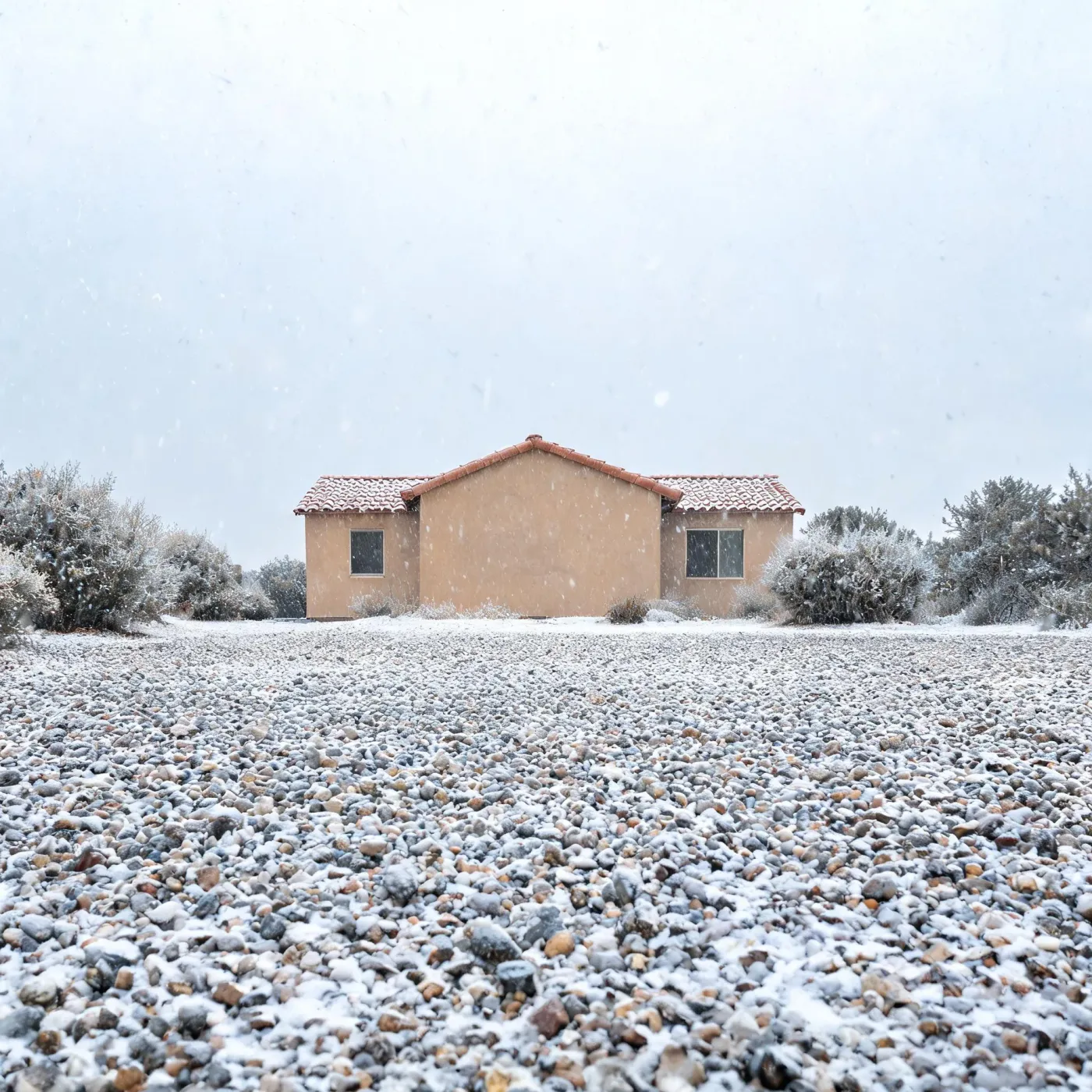
A single-story tan stucco house with a red tile roof stands behind a wide gravel yard dusted with snow, flanked by low shrubs, under a pale overcast sky with falling snowflakes.

Winter nights average 39°F statewide, according to NOAA climate data. That's mild compared to what a boiler is built to handle, and it shows in how little your system has to do. The burner fires to bring the water up quick after dark, then shuts off and leaves the house to coast once the sun's up. It's not laboring through a long cold stretch the way a boiler in Minnesota or Maine would. You'll notice this as short bursts of heat rather than a system running steady for hours. That pattern is part of why a boiler here tends to hold up longer than the same unit would somewhere colder.

NOAA nClimDiv 1991-2020 county normals weighted by homes

A closed laptop and a cream mug of coffee on a coaster sit on a dark wooden table, with a potted plant at left and a kitchen counter, tiled backsplash and shelf of ceramics in the background.

15 to 20 years, and you'll know when it's done

A boiler here lasts 15 to 20 years. Yours will tell you when it's getting close: a rumble from sediment, a pilot that won't hold, a pressure gauge that won't sit still. None of that means shut it off tonight. It means start paying attention and get it looked at before a cold night makes the decision for you.

When you're ready, the part that usually drags, finding someone who'll actually show up and knows boilers, isn't yours to do. No calling around, no explaining the knock in the tank to five different companies, no stack of quotes to sort through trying to guess who's honest. One licensed local contractor who installs these every season takes the call, looks at what you've got, and tells you straight what it needs.

A living room corner with a beige upholstered armchair holding navy and striped cushions, a small round wooden side table with a carved bowl and a potted green plant, a framed landscape picture on a pale wall, built-in shelving, and a curtained window.
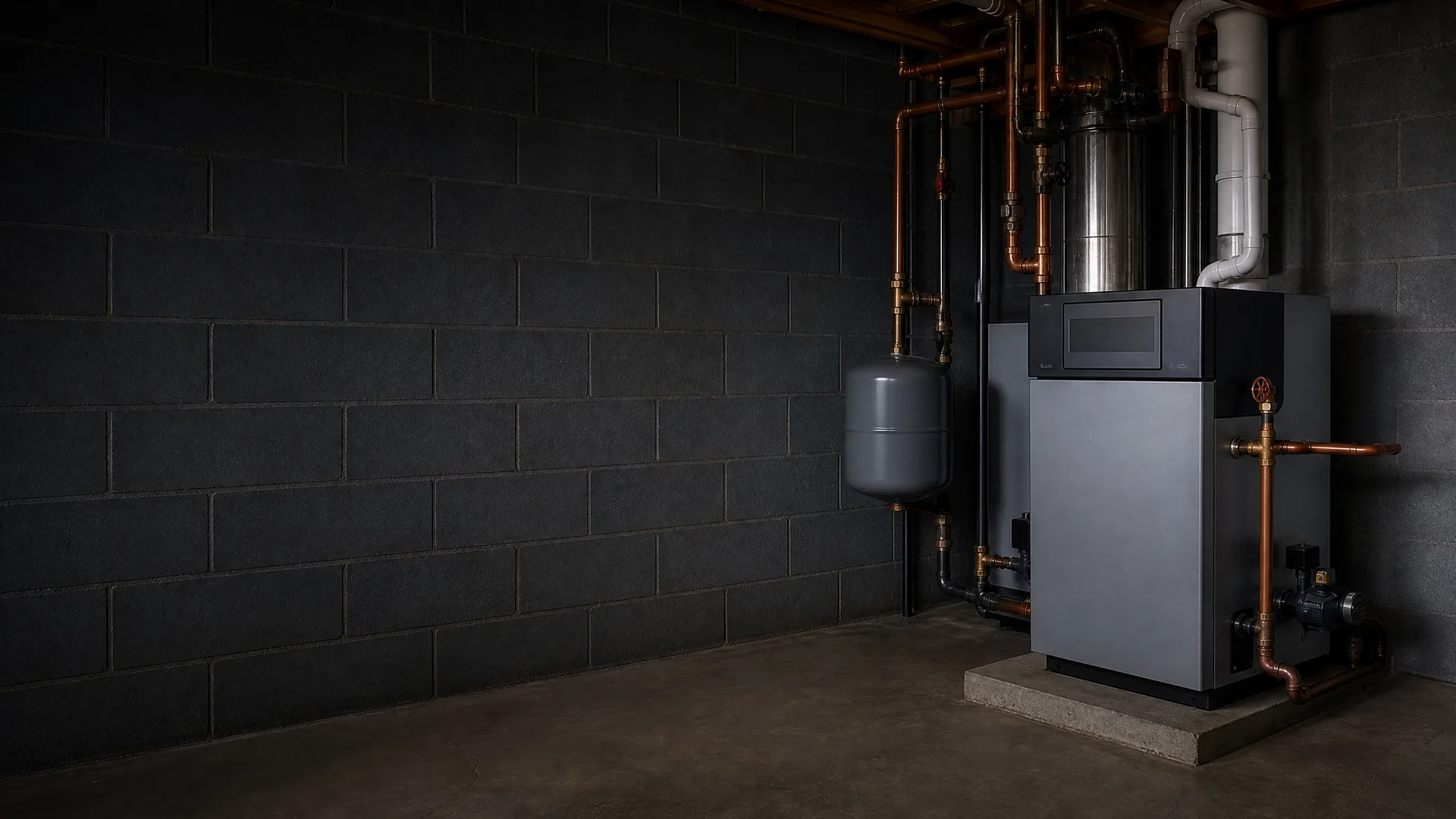
A gray boiler unit with a control panel sits on a concrete pad in a basement room with dark concrete block walls, connected to copper and metal piping, a gray expansion tank, and an insulated flue.

No phone calls to make

One installer gets your project, so there's no bidding war over it.

Step 1 of 3: Equipment